


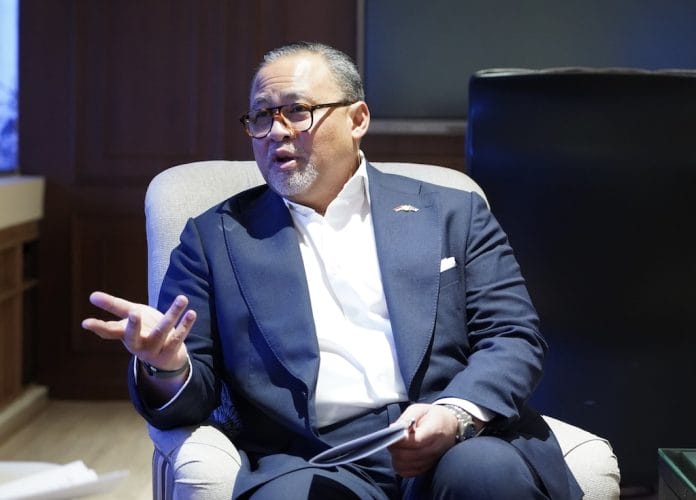
When Indonesia’s newly appointed Ambassador to Malaysia, Raden Dato’ Mohammad Iman Hascarya Kusumo, speaks about the relationship between the two neighbours, he rarely refers to diplomacy in conventional terms.
Instead, he speaks of family.
The ambassador, who himself carries a Malaysian honorific title and has family ties to Malaysia, believes the relationship between Kuala Lumpur and Jakarta has evolved beyond traditional state-to-state engagement into something much deeper.
“We commonly share a language, culture, border, tradition and heritage,” he says. “It goes far beyond the traditional bilateral relationship. In a way, we are Southeast Asian siblings.”
That familial bond, he argues, has become even stronger under the leadership of Indonesian President Prabowo Subianto and Malaysian Prime Minister Datuk Seri Anwar Ibrahim, who have known each other for decades.
The relationship between the two leaders, he says, has elevated bilateral ties to their highest level in years.
A Relationship Built On Trust
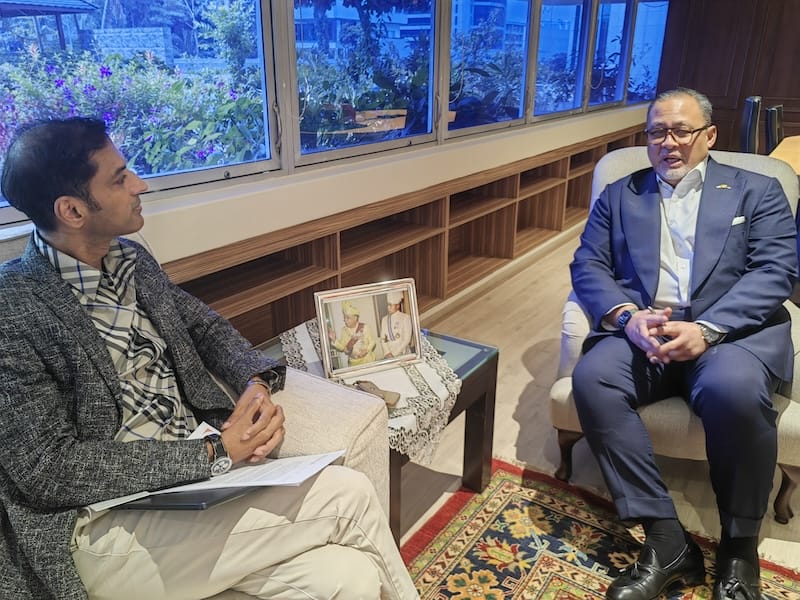
In an exclusive interview with BusinessToday the ambassador describes the current state of Malaysia-Indonesia relations as the strongest he has witnessed. Touching on various aspects of relationship between these two developing nation’s, we discussed on areas of trade, border, ASEAN and corruption.
On trade, the ambassador pointed out that import and export continues to expand, citing that political engagement is frequent, while communication between both governments has become increasingly seamless.
“As with any relationship, there are dynamics from time to time,” he says. “But because of the closeness between the President, the Prime Minister and His Majesty the Yang di-Pertuan Agong, everything is on the family level.”
That closeness has translated into unprecedented diplomatic engagement.
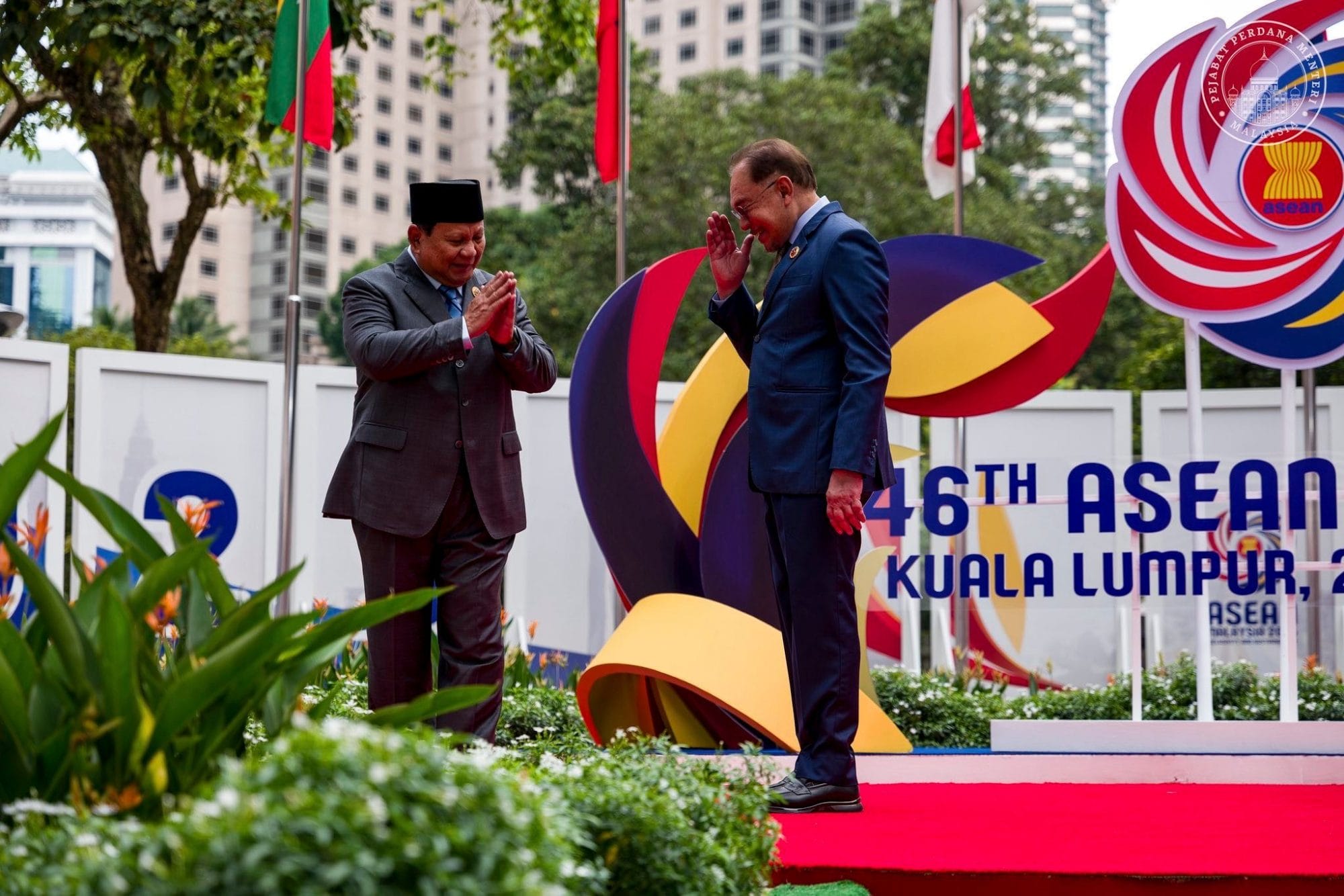
Prabowo visited Malaysia five times in 2025, making it one of the most frequent visits by any Indonesian president.
“So close is the relationship that sometimes visits happen within days of each other, even catching our embassy by surprise,” he laughs.
Yet thanks to the close coordination between Indonesia’s Foreign Ministry and Malaysia’s Wisma Putra, every visit proceeded smoothly.
For the ambassador who is not a career diplomat and having being appointed in October 2025 quickly added that frequent exchanges are not merely symbolic.
“The level of communication today is unparalleled.”
He points to the growing traffic among ASEAN leaders, including recent visits by leaders from Singapore and India, as evidence that regional diplomacy has entered a more collaborative phase.
Trade Heading Towards New Trade Figures
Economic ties continue to underpin the relationship.
After bilateral trade reached approximately US$26 billion in 2025, both governments expect total trade to approach US$29 billion this year, reflecting continued resilience despite global economic uncertainty.
While manufacturing products and food remain traditional pillars of bilateral trade, the ambassador believes the next wave of growth will come from entirely new sectors.
Tourism, education, semiconductor components, computer chips, renewable energy technologies and solar panel components are among the sectors Indonesia hopes to develop jointly with Malaysia.
“We are seeing more traffic on both sides for new products,” he says.
Indonesia’s vast reserves of minerals and natural resources complement Malaysia’s strengths in advanced manufacturing, marketing, packaging and higher education.
“Malaysia is very good in packaging, promoting and marketing, while Indonesia possesses abundant natural resources.”
Rather than competing, he believes the two economies naturally complement one another.
Collaboration, Not Competition
As Southeast Asia races to become a global manufacturing hub for semiconductors, renewable energy and halal products, some analysts have suggested Malaysia and Indonesia could increasingly compete for investment.
The ambassador disagrees.
“I think contrary to what people believe, this is not competition,” he says.
“If we collaborate together, we become a power to reckon with.”
Nowhere is that clearer than in the halal economy.
Indonesia, home to the world’s largest Muslim population, and Malaysia, recognised globally for its halal certification framework, could jointly shape international halal standards if both countries align their regulatory systems.
He cites fish gelatin as one example where Indonesia’s production capabilities could complement Malaysia’s growing demand.
“If we communicate, collaborate and put our thinking together instead of focusing on different regulations, we can become much stronger.”
He welcomes the ongoing cooperation between Malaysia’s Department of Islamic Development Malaysia (JAKIM) and Indonesia’s Badan Penyelenggara Jaminan Produk Halal (BPJPH), expressing confidence that remaining regulatory differences can eventually be harmonised.
Energy Security Drives Indonesia’s Biodisel Push
Energy remains another area of strategic importance.
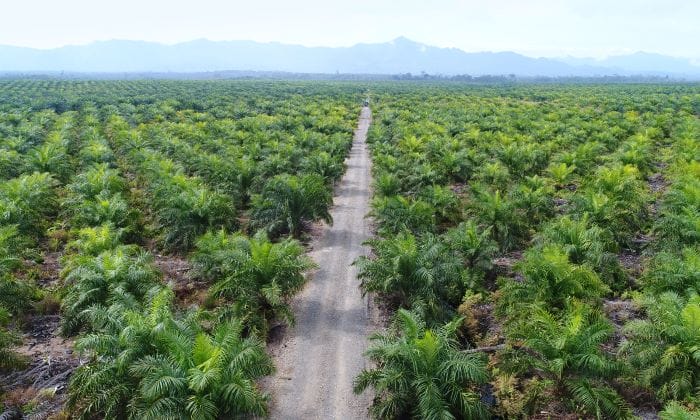
Indonesia’s implementation of the B50 biodiesel programme on 1 July forms part of President Prabowo’s broader ambition to achieve self-sufficiency in energy, food and strategic industries.
“The introduction of B50 is one of the pillars of the President’s programme because we want to reduce and eventually stop importing diesel.”
The policy also emerged partly in response to European restrictions on Indonesian palm oil products.
“If they don’t want our products, we’ll use them ourselves.”
Far from viewing the initiative as protectionist, the ambassador believes it creates new opportunities for other palm oil-producing nations, including Malaysia, through the Council of Palm Oil Producing Countries.
While B50 serves Indonesia’s immediate energy needs, he says the country continues exploring future alternatives including algae-based biofuels and other renewable energy technologies.
Prabowo’s Clean Up Mission
Asked whether recent policy adjustments affecting Indonesia’s palm oil sector could discourage foreign investment, the ambassador dismisses such concerns.
He describes the reforms as part of President Prabowo’s broader effort to simplify overlapping regulations inherited from previous administrations.
“It is not about deterring investors,” he explains.
“It is more like housekeeping.”
The objective is to create greater legal certainty while strengthening governance.
He believes Indonesia’s economic fundamentals remain solid despite global uncertainties.
“You have never seen any president in the past dealing with corruption and leakages the way this president does.”
Although meaningful reforms will take time, the ambassador says the government’s commitment to fiscal discipline and long-term planning provides investors with confidence.
“This is for long-term investment.”

Nusantara Remains On Track
Indonesia also continues progressing with the development of Nusantara, its future capital city in East Kalimantan.
Several Malaysian companies have already invested in the project, while discussions continue to improve connectivity between Sabah, Sarawak and the new capital.
The development has now entered its second phase, focusing not only on government buildings but also water supply, sanitation systems and broader lifestyle infrastructure required to support an entirely new city.
While parts of the administration were initially expected to relocate by 2029, the ambassador says implementation will ultimately depend on government approvals and readiness.
“The commitment remains.”
Resolving Thorny Issues
Despite the strong relationship, both countries continue working through longstanding issues involving migrant workers and maritime boundaries.
The ambassador describes labour migration as a natural economic phenomenon.
“People will always move somewhere they believe offers a better life.”
Instead of attempting to stop migration, he argues both governments should focus on creating better regulation and stronger protection from departure until workers return home.
Indonesia is currently awaiting Malaysia’s latest draft on migrant worker agreements while simultaneously reviewing earlier bilateral arrangements.
He also believes stronger enforcement is needed against employers hiring undocumented workers.
“If Malaysia imposes tougher punishment not only on illegal workers but also on employers, it will reduce illegal employment.”
Indonesia recently established a dedicated Ministry for the Protection of Indonesian Migrant Workers, reflecting the government’s commitment to improving overseas worker welfare.
Border negotiations have also made significant progress.
According to the ambassador, 98% of outstanding boundary issues have already been resolved, with the remaining matters now being discussed at the highest political level.
Given the close relationship between both leaders, he remains optimistic that the final issues can be settled amicably.
Anchors Of ASEAN
Beyond bilateral relations, the ambassador believes ASEAN itself is entering a defining moment.
With Southeast Asia’s youthful demographics, abundant natural resources and growing manufacturing base, he sees the region emerging as one of the world’s future centres of economic power.
“Indonesia and Malaysia are the anchors of ASEAN,” he says.
“The old world order is changing.”
Rather than looking towards Europe, he points to a broader South-South partnership involving ASEAN, China, India, Japan, Russia and South Africa as an increasingly influential force.
“Every 200 years or so, a new power bloc emerges.”
“I think ASEAN is becoming one of those power blocs.”
President Prabowo’s foreign policy philosophy, he notes, reflects that outlook.
“His motto is simple — one thousand friends is too few; one enemy is too many.”
A Personal Mission
As he begins his diplomatic tenure in Kuala Lumpur, the ambassador hopes to leave behind more than stronger trade figures.
His priorities include finalising agreements on migrant worker protection, encouraging greater investment flows, expanding educational and tourism exchanges, improving connectivity and strengthening people-to-people ties.
He also hopes Malaysians will discover more of Indonesia’s cultural richness.
“I want to see more Javanese restaurants,” he smiles.
“Not only Padang food. There are Javanese, Sundanese, Manadonese cuisines — so much more that Malaysians can explore.”
For him, that perhaps best captures the future of Malaysia-Indonesia relations.
Not simply neighbours conducting diplomacy, but two nations rediscovering just how much they already share.


