Malaysian small and medium enterprises (SMEs) that fail to provide credible emissions data could increasingly find themselves shut out of procurement lists, regional tenders and cross-border supply contracts as sustainability requirements move from corporate reporting into day-to-day commercial decision-making.
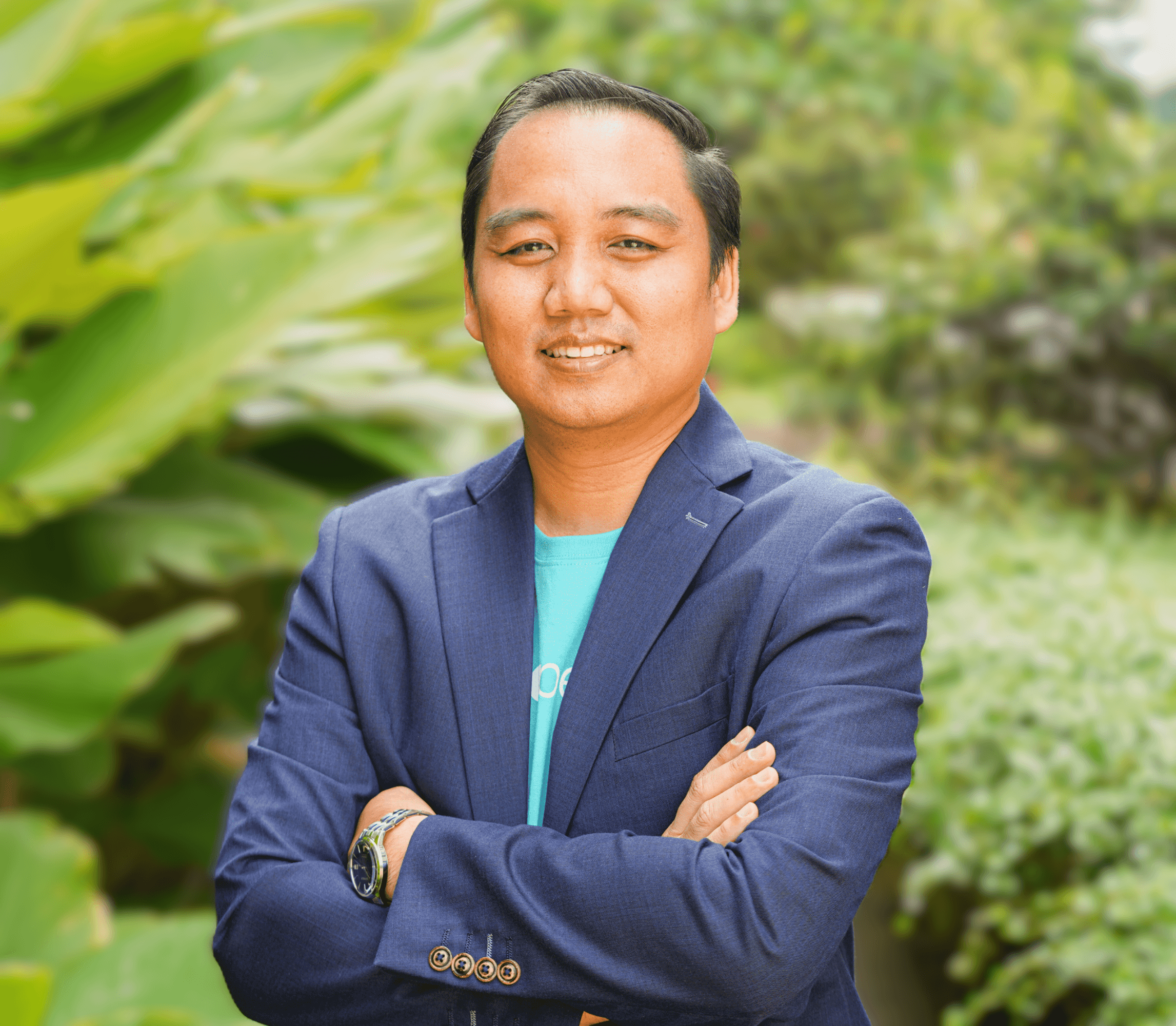
ESGpedia Vice President Jozsef Acabo said the shift is already under way as larger companies prepare for mandatory Scope 3 emissions reporting and begin scrutinising the carbon footprint of their supply chains more closely.
For suppliers, the message is becoming increasingly clear: ESG readiness is no longer simply about meeting disclosure expectations. It could determine who wins business and who gets left behind.
“The dividing line is not green versus not green. It is provable data versus opacity,” Acabo told BusinessToday in an exclusive email interview.
Procurement Rules Are Already Changing
Under Malaysia’s National Sustainability Reporting Framework, the largest Main Market issuers will be required to disclose Scope 3 emissions from FY27, with other listed companies following according to subsequent timelines.
Unlike Scope 1 and Scope 2 emissions, much of the information required for Scope 3 reporting sits outside a company’s own operations and within its network of suppliers.
That is already changing procurement behaviour.
Acabo said companies are beginning to map their value chains, issue ESG questionnaires and supplier scorecards, and incorporate emissions information into vendor onboarding and contract renewals.
For now, businesses appear more inclined to help existing suppliers become ESG-ready rather than replace them outright.
But that patience may have limits.
“A supplier that persistently cannot produce credible data is, in effect, asking its customer to carry an unquantified liability, and that patience will not last indefinitely,” Acabo said.
The implications are significant for Malaysia, where SMEs account for more than 97% of business establishments and close to two-fifths of gross domestic product.
Acabo cautioned that the transition could create a two-tier supply chain, with businesses capable of producing credible sustainability data gaining an advantage over those unable to demonstrate their emissions performance.
Carbon Data Becomes An ‘Entry Ticket’
The commercial pressure is extending beyond Malaysia.
Acabo said buyers across ASEAN are increasingly evaluating suppliers on carbon intensity alongside traditional considerations such as price, quality and delivery.
Singapore’s higher carbon tax, Malaysia’s introduction of carbon pricing and the European Union’s Carbon Border Adjustment Mechanism are making embedded emissions increasingly relevant to companies’ costs and reporting obligations.
“Verified carbon data has become the entry ticket for regional tenders and cross-border supply contracts.
“Companies that hold it can trade on it, while those without it face higher effective costs or risk losing contracts altogether,” Acabo said.
This shifts ESG from what was once largely viewed as a reporting or investor-relations requirement into something with direct implications for sales, procurement and competitiveness.
For SMEs supplying larger corporations, the ability to produce consistent and verifiable emissions data could therefore become as commercially important as meeting specifications on cost, quality and delivery.
Carbon Moves Onto The P&L
Malaysia’s planned carbon tax is expected to accelerate that shift further.

Acabo described the tax as a turning point because it transforms emissions from a disclosure issue into a measurable financial liability.
“The carbon tax turns emissions from a disclosure item into a line on the profit and loss statement, and that changes behaviour immediately,” he said.
According to Acabo, companies are responding by moving towards facility-level measurement and verification, incorporating internal carbon prices into capital expenditure decisions and modelling potential future liabilities under different scenarios.
Even businesses outside the first sectors expected to be covered are beginning to prepare, particularly as companies anticipate broader carbon pricing coverage over time.
The result is that suppliers with weak or incomplete emissions data may no longer represent merely an ESG reporting gap. They could create a financial exposure for the companies buying from them.
Weak ESG Data Carries A Price
The consequences are also becoming apparent in capital markets.

Acabo said institutional investors increasingly regard incomplete sustainability disclosure as unpriced risk.
That can translate into higher costs of capital, valuation discounts, more demanding due diligence requirements and, in some cases, exclusion from investment mandates altogether.
The issue remains particularly relevant in Malaysia, where only 11% of public-listed companies disclosed Scope 3 emissions during the 2023 reporting cycle, compared with 39% across Asia-Pacific, according to figures cited by Acabo.
At the same time, domestic institutional investors including Employees Provident Fund and Retirement Fund Inc have incorporated sustainability considerations into their investment policies, meaning the pressure for stronger ESG information is coming from both international and domestic capital.
SMEs Still Have Time But Not Much
Despite the growing pressure, Acabo said the transition does not have to result in widespread exclusion of smaller companies.
Malaysia’s Simplified ESG Disclosure Guide provides SMEs with a more proportionate framework for producing the information increasingly requested by listed companies.
Businesses can also tap an ESG tax deduction of up to RM50,000 per year of assessment from 2024 to 2027 for qualifying expenditure including greenhouse gas measurement, verification, certification, ESG software, training and professional support.
For SMEs, Acabo said the priority should be to begin digitising energy, fuel and procurement records, convert that information into credible emissions figures and have the data verified.
Once established, the same dataset can be reused across customer questionnaires, financing applications and other disclosure requirements.
That turns ESG data from a compliance burden into a reusable business asset.
Acabo’s warning is straightforward: waiting until mandatory requirements arrive could prove costly.
“The SMEs still on procurement lists in 2027 will be the ones that treated ESG data as a commercial asset in 2026,” he said.