


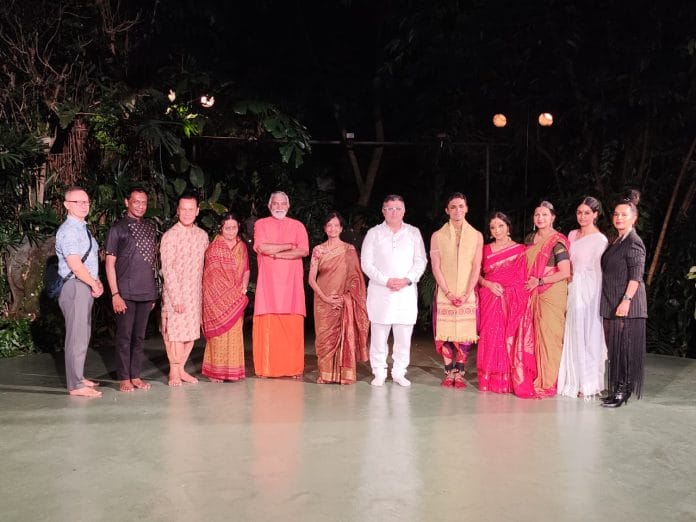
Following the two-night run of Anurāgāvali: Dance of Longing by Sutra Foundation, I was given the opportunity to speak with Datuk Ramli Ibrahim, founder of Sutra Foundation and advocate for the Malaysian arts sphere alongside Pritam Das, celebrated Bharatanatyam dancer and solo artist. Alongside other journalists, we unearthed conversations surrounding culture, youth, identity, and the critical role of national investment in the arts.
Fresh off Pritam’s powerful solo performance in Anurāgāvali, Pritam shares that the arts teach discipline, key to his stunning performances. After all, talent and consistence go hand in hand, and it is ultimately discipline is what is needed to invest in your craft as an artist. He then goes on to share that discipline goes beyond the studio; your lifestyle, diet, and mental space need to be in top form, as this helps you to improve as a dancer and an artist. He also shares that he reads scholarly works to improve his work as an artist.
Datuk Ramli then says that for him, dance was to the point when it became all encompassing, embodying every facet of his life. If he doesn’t dance, he feels unfulfilled. Pritam agrees, as dance is a demanding activity and bleeds into your personal and other aspects of life. A child performer, it makes sense that he had to learn independence and discipline from a young age.
Both Pritam and Datuk Ramli, throughout the conversation, discuss rasa in performing. Rasa, according to them, is what differentiates dance from performance, what gives humanity to it. We then turn to AI: we’ve seen it mimicking art and song, will it come for dance too? Datuk Ramli scoffs at the idea, saying that the A in AI is artificial, and it does not replace human emotions felt by both performers and the audience members. After all, what is a ChatGPT generated dance video compared to a live ballet, or Chinese Fan performance, or in this case, a Bharatanatyam rendition of the Ramayana?
In Pritam’s body of work, he has played both male and female characters. We then ask whether that has led to backlash, if any, among the community. Sadly, it has. A man in dance, especially a Raja Rani Attam or a Bharatanatyam artist in India, is considered unmasculine due to playing female roles. For Pritam, this has led to harassment and bullying, but he does not let that phase him: he lets his work speak for himself. He also hopes that more young boys participate in dance, likening it to sports. Given that yours truly was in ballet as a child with only one or two boys in the class, I too can hope.
Both then go on to discuss how whilst performing is difficult and demanding, they do it for the rasikas, the ideal audience members who do more than watching and listening, but also actively connecting with the art form. Datuk Ramli laughingly tells us of the hoi polloi audience members, the T20 who shallowly dip their toes in the arts to appear cultured. Pritam then shares that while he has heard many shallow critiques about his turns and jumps, he appreciates the few who understood what he was trying to convey. Those who understood the cultural and mythical (as the dance form borrows from Indian mythology), are the ones whom Pritam likes hearing from the most.
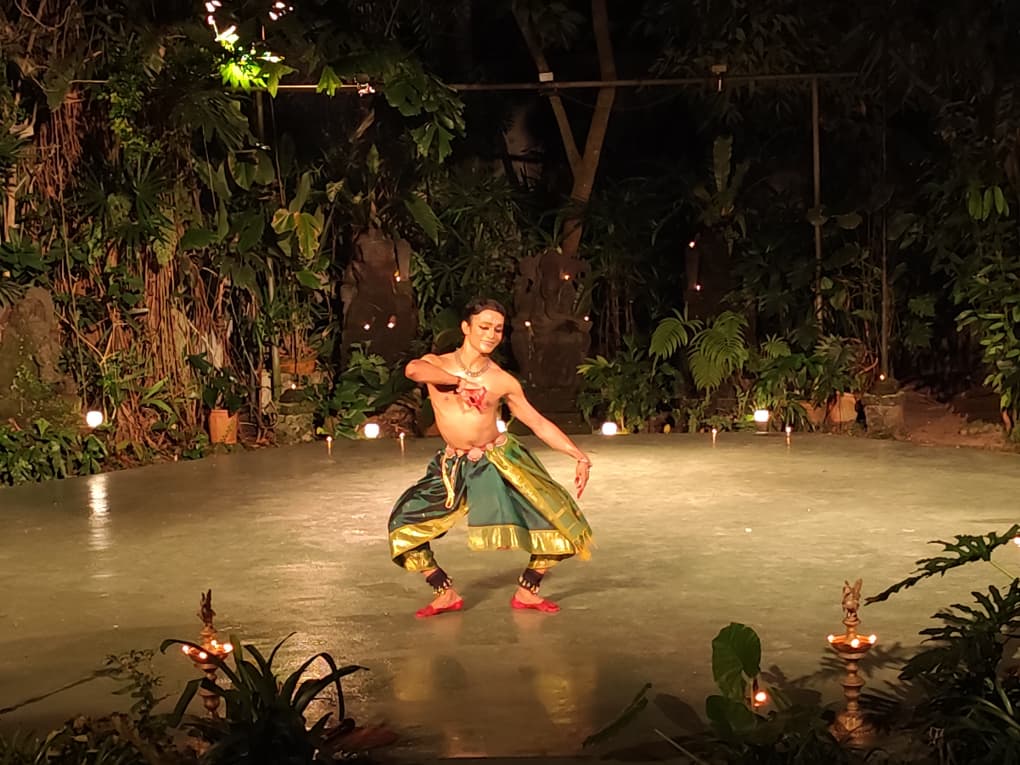
Datuk Ramli then proudly shares a photo of Pritam mid-pose at Sutra Foundation. I then point out that since Bharatanatyam is inspired by nature, it then makes sense to see a dancer surrounded by it. Pritam agrees; art and nature are intertwined. Art teaches one to observe the world around you and reflect that in your own work. In that, he says, he is going back to the source itself. After all, as Datuk Ramli then states: art doesn’t lie, art reflects.
In a final call to youth, Datuk Ramli says that the media, gesturing to us, plays a role in this. In the world of TikTok and K-Pop dances, traditional performance is losing its shine. Those who do pursue the arts, then fear the stigma, pigeonholing, and constant queries of what they aim to do besides teaching. But Datuk Ramli hasn’t given up hope. He thinks that there is work to be done, yes, but with programmes suited for younger generations alongside media presence, traditional bodies of dance still can be saved in Malaysia.
With that, our conversation came to an end. This author cannot help but feel inspired and enlightened by this insightful talk, of hearing both masters of their craft discuss their work. I can only wish the best for both of them, and for more artistic endeavours in not just the Klang Valley, but in other states and accessible to all.


