


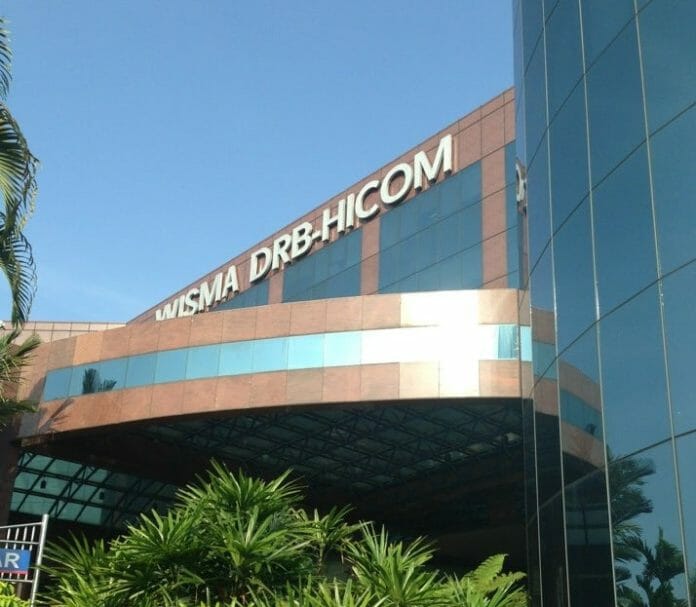
DRB-Hicom Bhd’s first-half financial year 2026 (1HFY26) core net profit came in broadly in line with Kenanga Research’s expectations, although earnings remained weighed down by weaker contributions from its associate companies and ongoing losses in several non-automotive businesses.
Kenanga said DRBHCOM’s 1HFY26 core net profit, excluding RM8 million in one-off items, accounted for 49% of its full-year forecast, but only 37% of the consensus estimate.
No dividend was declared as the group typically announces dividends on an annual basis.
Automotive segment drives revenue growth
DRBHCOM’s 1HFY26 revenue increased 24% year-on-year (YoY), primarily driven by stronger mobility sales, higher financing income, improved postal operations and growth in vehicle inspection services.
Mobility sales rose 33%, largely supported by Proton, whose sales jumped 40% to 98,009 units.
Kenanga said Proton benefited from exceptional demand for the Proton e.MAS 5, which recorded the highest sales volume for a single EV model in Malaysia in 2026, alongside strong demand for the e.MAS 7 PHEV and Premium Plus variants and the Proton Saga.
Proton’s Saga backlog also exceeded 70,000 units, although Kenanga noted that cancellation rates remained relatively high due to production capacity constraints.
These gains more than offset weaker sales from Mitsubishi, which recorded sales of 6,757 units, up 1%, and Isuzu, whose sales fell 19% to 5,092 units amid intense competition in the mid-market segment.
Banking unit profit contribution declines
Financing income from Bank Muamalat increased 9% YoY, but its profit contribution to DRBHCOM declined 19%.
The postal services segment performed better, with revenue rising 8% and segment losses narrowing by 30%.
Kenanga attributed the improvement to stronger courier services, logistics operations and improved contributions from aviation and Ar-Rahnu.
Both marine vessels were fully operational during the period, supporting the logistics business and helping offset weaker traditional mail volumes.
The services segment also grew 3%, driven by higher vehicle inspection volumes.
However, these improvements were partly offset by the properties and other segment, where revenue fell 83% and losses widened 27% due to the lack of new property and construction projects.
DRBHCOM’s share of associates’ profit declined 27%, mainly due to weaker earnings from 34%-owned Honda Malaysia.
Honda Malaysia sold 25,929 vehicles in 1HFY26, down 23%, with Kenanga attributing the weaker performance to heavy discounting aimed at sustaining sales volumes.
Overall, DRBHCOM’s core net profit declined 4% YoY despite the strong increase in group revenue.
Kenanga maintains RM0.77 target price
Kenanga maintained its earnings forecasts and RM0.77 Sum-of-Parts-derived target price for DRBHCOM.
The research house retained its Underperform rating, citing concerns over the group’s ability to fully capitalise on its position as Malaysia’s second-largest automotive player.
One key issue is underutilised production capacity, with Proton’s Tanjung Malim plant capable of producing up to 250,000 vehicles annually, while its market share stands at around 25%.
Kenanga also highlighted weaker profit contributions from Bank Muamalat and the uncertain outlook for DRBHCOM’s postal and property businesses, which continue to record losses.
The proposed introduction of a floor price for courier services is being monitored by the research house as a potential catalyst for improving the postal segment’s operating environment by promoting healthier competition.
“With rising competition in the automotive segment, especially within the current mid-market segment of Proton, and an uncertain outlook for its other segments, we maintain our Underperform call,” Kenanga said.
Potential re-rating catalysts include sustained mobility sales and margins, as well as a turnaround in the group’s postal and property businesses.


