


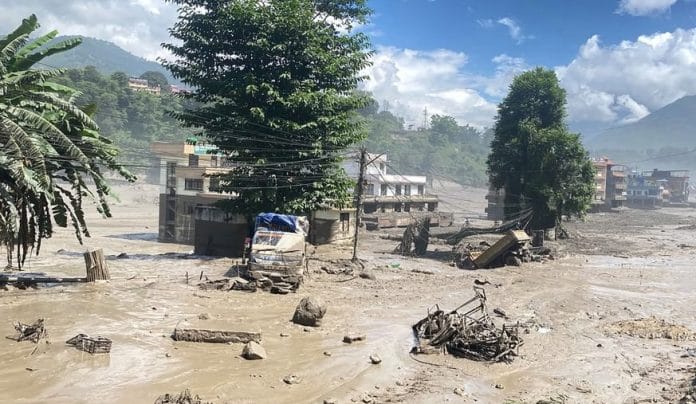
At least 157 people have died after a devastating flash flood swept through areas along the Nepal-Tibet border, with authorities linking the disaster to the collapse of part of a Himalayan glacier.
The disaster struck on Wednesday after the lower section of a glacier reportedly collapsed, sending huge amounts of ice, rock and mud into a valley near the border.
The debris then surged through the Lhende Khola River, triggering a powerful flash flood that swept through Gyirong Port in Tibet and neighbouring areas of Nepal.
Roads, power generation infrastructure and villages were badly affected as the fast-moving torrent carried mud and sediment downstream.
Authorities in both regions warned that the death toll could rise as the scale of the destruction becomes clearer and many people remain unaccounted for.
More than 400 foreign visitors have reportedly been reported missing, including 133 Indian nationals who were travelling as part of a religious group, 47 Americans, 34 Australians, 33 Britons and 24 Canadians.
Nine South Korean nationals working at a hydropower plant were also reported missing, along with several Malaysians and South Africans.
The glacier collapse is believed to have been triggered by an earthquake, although the full circumstances surrounding the disaster remain under assessment.
Rescue teams involving police and military personnel are now searching affected areas, but operations have been complicated by widespread mud, sediment and flooding.
Helicopters have also been unable to land in some locations because water levels remain too high.
Power supplies have been disrupted across several areas while residents living in low-lying communities have been moved to safer locations.
Communities along rivers have meanwhile been urged to remain alert for possible further flooding.
Across the border in India, around 5,000 people in Bihar were evacuated after authorities issued a flood warning amid worsening weather conditions and rising water levels.
The United Nations said it was mobilising relief supplies and personnel to support affected communities, while the Indian government said it was coordinating closely with Kathmandu on rescue and humanitarian assistance.
South Korea has also announced plans to send a rapid response team to the disaster zone.
With hundreds still unaccounted for and access to some areas remaining difficult, authorities continue to warn that the situation could worsen before rescue and recovery efforts can be completed.


