


Malaysia recorded RM218.5 billion in approved investments in the first half of 2026, an 11.7% increase from RM195.5 billion a year earlier, with the projects expected to create 99,030 jobs once implemented.
The investments covered 2,746 projects across the services, manufacturing and primary sectors, with expected employment rising 8.4% compared with the first half of 2025.
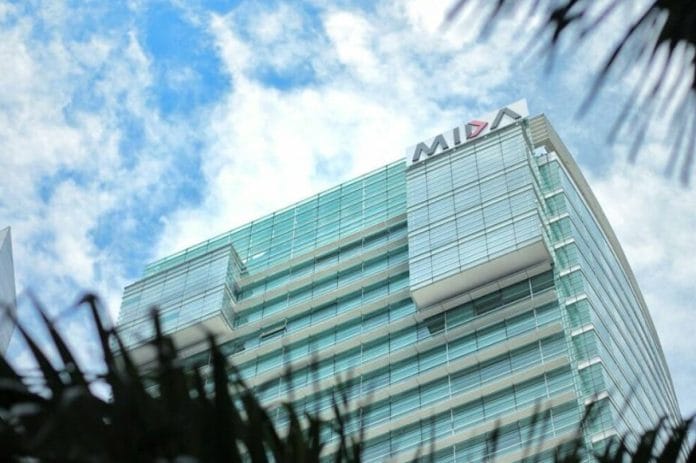
The Malaysian Investment Development Authority (MIDA) said the RM218.5 billion approved during the six-month period was equivalent to 50.7% of the RM431.1 billion recorded for the whole of 2025.
The investment performance came against a softer global economic environment, with the International Monetary Fund’s July 2026 World Economic Outlook projecting global growth of 3% this year.
Malaysia’s economy, meanwhile, is projected to expand by 4.7%, ahead of global and regional averages.
Foreign investments (FI) accounted for the majority of approved investments, increasing 18.5% year-on-year to RM126.9 billion, or 58.1% of the total.
Domestic investments (DI) increased 3.5% to RM91.6 billion, accounting for the remaining 41.9%.
The United States emerged as Malaysia’s largest source of foreign investment with RM33.1 billion, followed by Singapore at RM25.9 billion and Japan at RM22.3 billion.
China contributed RM16.5 billion, while the Cayman Islands accounted for RM4.1 billion.
Combined, the five leading sources contributed more than 80% of Malaysia’s approved foreign investments during 1H26.
Selangor attracted the largest amount of approved investments among the states at RM70 billion across 835 projects, which was also the highest number of projects recorded by any state.
The state’s services sector attracted digital investments in areas including artificial intelligence, big data analytics, cybersecurity, financial technology, cloud computing and the Internet of Things.
Johor was the second-largest recipient with RM59.4 billion, supported by developments surrounding the Johor-Singapore Special Economic Zone (JS-SEZ) and upcoming Rapid Transit System (RTS) Link connectivity.
Kuala Lumpur secured RM26.6 billion, including investments in residential and serviced apartment developments associated with urban growth, transit-oriented developments and demand for more accessible housing.
Penang attracted RM20.2 billion, driven largely by advanced manufacturing and semiconductor investments, while Sarawak secured RM10.8 billion, primarily from offshore oil and gas exploration projects.
The services sector remained the country’s largest investment recipient, attracting RM149.6 billion across 1,750 projects.
Approved investments in the sector increased 21% year-on-year and are expected to create 34,475 jobs.
Foreign investment in services surged 66.7% to RM86.9 billion, while domestic investments contributed RM62.7 billion.
Information and communications emerged as the largest growth driver, with approved investments jumping 68.2% to RM103.3 billion.
Within the segment, data-centre and cloud-computing projects alone accounted for RM95.8 billion, equivalent to nearly 44% of all approved investments in Malaysia during the first half.
The strong inflow reflects rising regional demand for AI computing capacity as Malaysia builds its position as a major digital infrastructure destination.
Malaysia has been ranked by the United Nations Conference on Trade and Development (UNCTAD) among the world’s 10 largest data-centre destinations and is targeting becoming an “AI nation” by 2030.
Amid rapid expansion, Malaysia’s Data Centre Task Force is streamlining approvals, with projects required to demonstrate secured power and water resources as well as compliance with green requirements.
Priority is also being given to operators that support Malaysia’s domestic supply chain.
Other major services subsectors included real estate with RM33.5 billion in approved investments, utilities at RM3 billion, transport services at RM2.9 billion and support services at RM2.3 billion.
Malaysia’s manufacturing sector attracted RM51.3 billion across 973 approved projects during 1H26.
While the value of manufacturing investments was 25.1% below the exceptionally high level recorded in the same period last year, MIDA said the comparison was affected by RM18.5 billion worth of large, lumpy projects approved in the basic metals, chemicals and non-metallic minerals industries in 1H25.
Excluding those projects, manufacturing investment approvals increased 2.6% year-on-year.
More significantly, the number of approved manufacturing projects surged 88.2%, indicating investment was being spread across a broader base of manufacturing activities.
New manufacturing projects contributed RM25.8 billion, or 50.3% of total manufacturing approvals, while expansion and diversification projects accounted for RM25.5 billion, or 49.7%.
The value of new projects jumped 112.2% year-on-year.
Foreign investors contributed RM32.7 billion, representing 63.8% of total manufacturing investments, while domestic investment increased 23% to RM18.6 billion.
Manufacturing remained the biggest source of expected employment from the approved investments, accounting for 64,555 jobs, or 65.2% of the overall 99,030 positions expected to be created.
The local managerial, technical and supervisory (MTS) employment component increased 11% year-on-year to 21,677 positions.
Meanwhile, 19.7% of local manufacturing jobs generated by the approved projects are expected to offer monthly salaries of RM5,000 or more, an increase of 7.7% year-on-year.
Electrical and electronics (E&E) led manufacturing investments with RM16.6 billion, followed by machinery and equipment at RM7.5 billion.
Chemicals and chemical products attracted RM5.5 billion, while transport equipment and food manufacturing each secured RM4.9 billion.
Collectively, the five largest industries represented 76.9% of approved manufacturing investments.
Machinery and equipment investments increased 44.8%, while food manufacturing recorded a 40.9% increase, placing them among the fastest-growing manufacturing segments.
Malaysia also continued to attract export-oriented manufacturing projects.
Nearly one-third, or 302 of the approved manufacturing projects, intend to export at least 80% of their output. The number of these highly export-oriented projects increased 57.3% from a year earlier.
E&E, machinery and equipment, fabricated metal products, plastic products, transport equipment and food manufacturing collectively accounted for 70.9% of the 302 highly export-oriented projects approved during the period.


