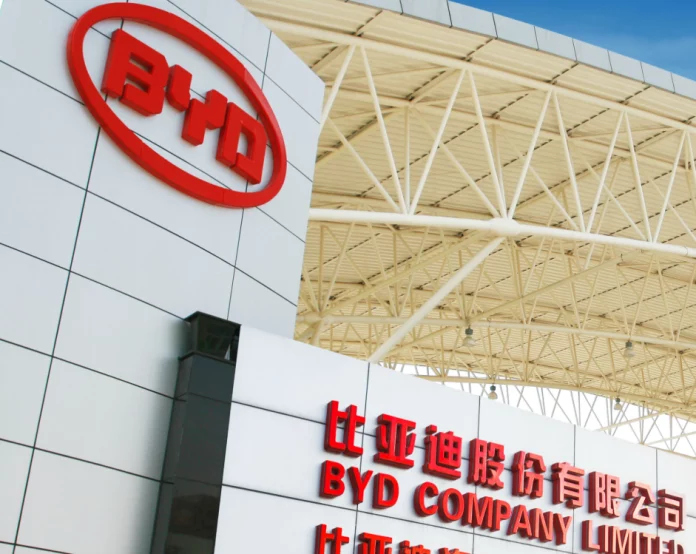
Chinese electric vehicle giant BYD Co Ltd is set to unveil its next investment move in Malaysia within a week, but remains tight-lipped on whether the plan will involve a local manufacturing partner or a standalone production facility.
Its Vice President Liu Xueliang said the automaker was continuing to explore cooperation with Malaysian partners as it looks to deepen its presence and support the country’s new energy vehicle ecosystem.
“We will continue to explore, together with local partners, how we can better support the development of Malaysia’s new energy vehicle industry,” Liu told Malaysian media after the Asia-Pacific Story session, Stories of Industrial Integration, on Sept 5.
He said BYD’s business in Malaysia was progressing well and that the company would soon outline its approach towards longer-term sustainable development.
However, when pressed on whether BYD would work with a Malaysian partner or pursue another manufacturing route, Liu offered little detail.
“Wait another week and we will announce it,” he said.
The upcoming announcement is being closely watched as questions remain over BYD’s localisation strategy in Malaysia.
In May, the automaker was reported to be assessing a potential contract assembly arrangement with Sime Motors’ Inokom plant in Kulim, Kedah, as part of its review of local manufacturing options.
At the same time, progress surrounding BYD’s proposed manufacturing facility in Tanjung Malim, Perak, appeared to have stalled earlier this year, adding uncertainty over the group’s eventual investment structure.
The decision comes as Malaysia seeks to attract greater EV investment and localisation across the automotive supply chain, while tightening conditions on imported electric vehicles.
From July 1, fully imported completely built-up EVs must carry a minimum declared cost, insurance and freight value of RM200,000 and have a minimum power output of 245 horsepower, following the expiry of special tax exemptions for imported complete built-up EVs at the end of 2025.
Despite the changing policy and investment landscape, Liu reaffirmed BYD’s long-term commitment to Malaysia, saying the group continues to see growth opportunities nationwide.
He highlighted East Malaysia as an area with significant potential, although expansion would depend on introducing models suited to the market.
“We believe East Malaysia still has significant room for development, but first, we hope to have suitable models for the East Malaysian market,” Liu said.
For now, BYD’s precise investment route remains under wraps — with the market waiting for an announcement that could clarify whether Malaysia will become a deeper manufacturing base for the Chinese EV giant.