


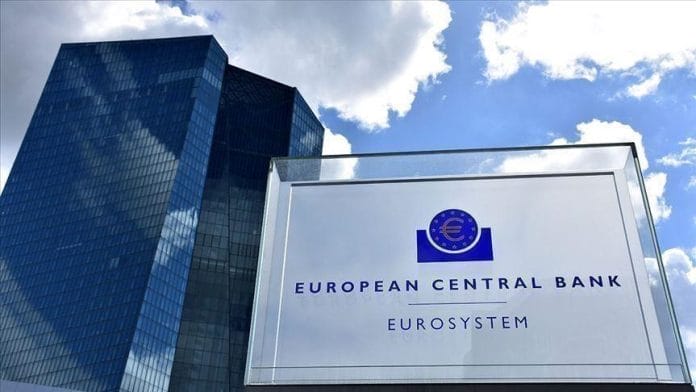
The euro area economy expanded more than initially estimated in the second quarter, underpinned by exports and consumer spending, revised data from Eurostat showed Monday.
On the quarterly basis, the euro area economy demonstrated unexpected strength in 2Q26, with GDP expanding by +0.6%qoq (1Q26: 0.0%qoq), revised up from the initial estimate of +0.4%qoq to mark the fastest quarterly expansion since 2Q22. This sequential acceleration was heavily influenced by a sharp rebound in Ireland’s volatile GDP, which surged +10.2%qoq following a -7.8%qoq contraction in 1Q26.
On an annual basis, eurozone growth doubled to +1.2%yoy (upwardly revised from +1.0%yoy in prior estimates) compared to +0.6%yoy in 1Q26. The economic momentum was broad-based across domestic and external demand components: household consumption accelerated to +1.2%yoy (1Q26: +1.0%yoy), gross fixed capital formation rebounded sharply to +1.4%yoy (1Q26: +0.3%yoy), and export growth turned positive at +3.9%yoy (1Q26: -0.1%yoy), easily outpacing an import rise of +3.6%yoy (1Q26: +1.9%yoy). Conversely, government expenditure moderated to +1.9%yoy (1Q26: +2.3%yoy). Performance across the bloc’s major member states was mixed: GDP growth picked up in Germany (+1.0%yoy; 1Q26: +0.7%yoy) and Italy (+1.0%yoy; 1Q26: +0.8%yoy), held steady at a robust +2.7%yoy in Spain, but cooled in France (+0.5%yoy; 1Q26: +0.7%yoy).
MBSB noted that the ECB is widely expected to raise its key deposit facility rate by +25 bps to 2.50% at its upcoming monetary policy meeting this week. This potential hike, driven by persistent inflationary pressures from the ongoing war in the Middle East and rebounding energy prices. The recent reading shows that headline inflation accelerated to +3.3%yoy in Aug-26 (Jul-26: +2.9%yoy), remaining elevated above the ECB’s +2% target.


