


Hong Leong Investment Bank (HLIB) Research maintained its OVERWEIGHT call on Malaysia’s technology sector after a broadly positive second-quarter earnings season, citing a widening semiconductor upcycle, stronger corporate guidance and sustained global artificial intelligence (AI) investment.
HLIB said the 2Q26 reporting season largely cleared a higher earnings bar, with management commentary becoming more confident and companies providing greater visibility on demand and capacity expansion plans extending into 2027.
Within HLIB’s coverage, six companies met expectations, one beat forecasts and two missed, improving from three misses, four in-line results and one beat in 1Q26.
Across the 20 technology companies tracked by the research house, there were six misses, 11 in-line results and three beats against consensus expectations.
HLIB said the composition of results was more encouraging than the headline numbers suggested, as market expectations and earnings forecasts had risen following the technology sector rally in April.
Even key earnings misses outside the consumer electronics manufacturing services segment — including Unisem, Pentamaster and Greatech — were largely attributed to timing, taxation and higher costs during early production ramp-ups rather than weak demand.
Demand and order books remained strong across all three companies, it said.
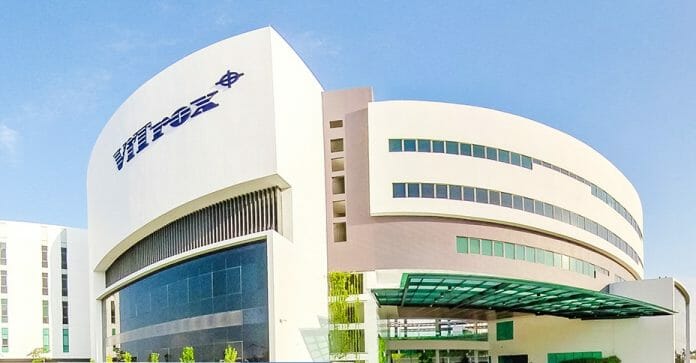
Meanwhile, ViTrox, MI Technovation and UMS Integration were among the companies that clearly exceeded expectations, with ViTrox and MI Technovation recording their second consecutive earnings beats.
HLIB said guidance from major global technology companies provided greater conviction over the medium-term semiconductor earnings outlook.
Nvidia has guided for about 70% revenue growth in FY28, with growth constrained by supply rather than demand, while Broadcom expects its AI revenue to double in each of the next two years on strong custom-chip demand from hyperscalers.
ASML, meanwhile, is adding 30% more lithography capacity for 2027, which HLIB said is already fully booked, while evaluating another 30% capacity increase for 2028.
TSMC and the three major memory manufacturers have also increased capital expenditure guidance and continue to expand capacity aggressively.
HLIB expects these investments to cascade through the semiconductor supply chain, benefiting Malaysian companies involved in equipment and precision engineering, optical and photonics technologies, power semiconductors and hard disk drive-related activities.
At the heart of the semiconductor investment cycle is an unprecedented level of spending by hyperscale technology companies.
HLIB expects hyperscaler capital expenditure to reach about US$800 billion in 2026 before exceeding US$1.2 trillion in 2027.
The research house said the bigger question for investors is no longer whether hyperscalers can finance this spending, given their strong cash flows and balance sheets, but whether AI investments will generate sufficient returns to justify the scale of expenditure.
HLIB said cloud revenue growth reported by hyperscalers provides some indication of monetisation, while greater clarity could emerge from the expected public filing for Anthropic’s proposed initial public offering.
Despite the positive industry outlook, HLIB cautioned that a potential US Federal Reserve rate hike could pressure technology-sector sentiment in the near term.
However, it does not expect such a development to trigger a material reduction in technology exposure, arguing that inflationary pressure could still ease while the opportunity cost of being underweight during a major capital expenditure upcycle remains high.
Instead, HLIB expects greater rotation within the sector towards companies offering stronger earnings visibility and positive earnings revisions that have yet to be fully reflected in valuations.
The research house said it continues to favour companies where earnings growth can outpace valuation multiple expansion.
HLIB has rolled forward its valuation base across its technology coverage to mid-2028 from 2027, while modestly reducing target valuation multiples. The changes resulted in generally higher target prices, except for a slight reduction for SkyeChip.
HLIB named ViTrox, UWC and SAM Engineering as its top technology hardware picks, citing their stronger earnings visibility and positive revision momentum.
The research house also views the recent pullback in ITMAX System Bhd as an accumulation opportunity, saying the weakness appeared to be driven more by broader concerns surrounding politically linked stocks rather than the company’s underlying performance.
HLIB said ITMAX’s earnings delivery remains solid.
Overall, the research house believes the combination of expanding global semiconductor investment, rapidly rising AI infrastructure spending and improving earnings momentum among Malaysian technology companies supports its continued OVERWEIGHT stance on the sector.


