


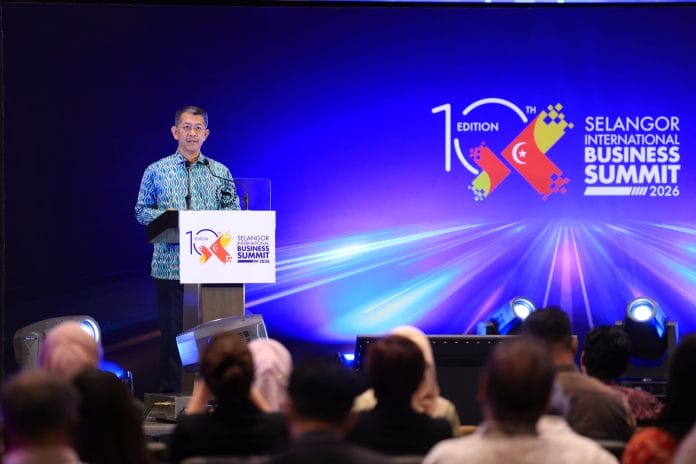
Over the past decade, the Selangor International Business Summit (SIBS) has evolved from a trade and exhibition platform into one of the state’s principal instruments for attracting investment, developing talent and connecting Selangor businesses with opportunities beyond Malaysia.
Since its inception in 2015, SIBS has generated RM30.56 billion in cumulative potential transaction value, growing substantially in participation, business engagement and the breadth of industries represented. As it enters its 10th edition in 2026, the summit is taking another significant step — positioning Selangor as a gateway through which companies can establish themselves in Malaysia before expanding across ASEAN.
For Invest Selangor Bhd Chief Executive Officer Dato’ Hasan Azhari Haji Idris, SIBS’s evolution is therefore about more than building a larger annual event. It is about using the platform to support the state’s longer-term economic strategy — bringing investment, industry, technology, talent and regional connectivity together.
In an exclusive interview with BusinessToday, Hasan said the biggest transformation over the past decade has been SIBS’s transition from a conventional exhibition into a broader economic platform.
“I would say the biggest transformation is that SIBS is no longer just an exhibition where companies come to showcase their products and services,” Hasan said.
“Over the past 10 years, it has grown into a platform that brings together government, investors, industry players, businesses and talent to support Selangor’s wider economic agenda.”
A Decade Of Transformation
The RM30.56 billion in cumulative potential transactions illustrates how far SIBS has come, but Hasan said the summit should not be assessed on transaction values alone.
“For us, the value of SIBS is not only measured by the transaction value. It is also about the partnerships created, the connections made and the opportunities that continue beyond the four days of the summit,” he said.
The 10th edition, scheduled for Oct 14 to 17, is consequently being used to signal where Selangor intends to take its economy next. SIBS 2026 is aligned with Rancangan Selangor Kedua, with greater emphasis on high-value investment, strategic industries, technology, innovation, talent development and regional connectivity.
The summit now comprises seven specialised components spanning the investment ecosystem.
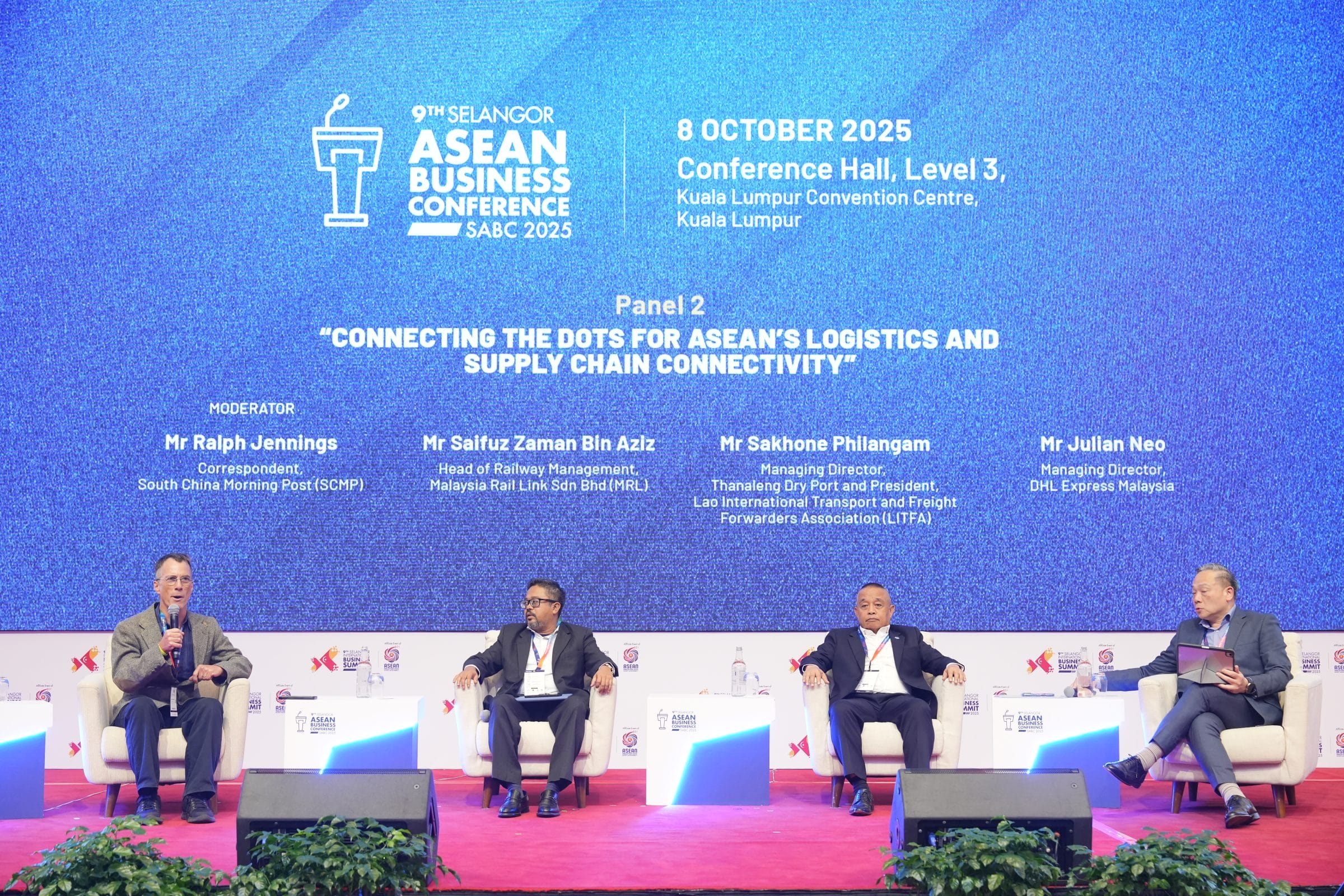
Established platforms such as the Selangor ASEAN Business Conference (SABC), Selangor Investment & Industrial Park Expo (SPARK) and Selangor Investment Forum (SIF) provide policy dialogue, industrial park exposure and investment pipeline visibility.
They are complemented by sector-focused platforms including the Selangor AI & Semiconductor Summit (AISEM@Selangor), Selangor Techsphere Summit (STS), Selangor International Care Expo (SICE) and Selangor Career Outreach Talent Expo (SCOUT), covering AI and semiconductors, industrial automation, the care economy and talent development.
Hasan describes the seven-pillar structure as a “complete business ecosystem”, allowing an investor to examine potential partners, supply chains and regulatory support in one place rather than navigating them separately.
“Whether you are a multinational setting up a regional base or a local SME looking to scale, you can enter SIBS with an idea and leave with a clear execution roadmap,” he said.
Taking Selangor Into ASEAN
The most significant change in SIBS’s regional ambitions is SIBS@ASEAN, which for the first time has taken the platform beyond Malaysia.
“Through the SIBS@ASEAN initiative, Selangor aims to strengthen its role as a gateway for businesses and investors looking to access opportunities across the ASEAN region,” he told BusinessToday.
“Selangor already has a strong industrial base, established infrastructure, connectivity and a diverse business ecosystem, which provide a solid foundation for companies looking to expand regionally.”
The strategy received its first overseas test in Indonesia.
The inaugural SIBS@ASEAN Bandung Edition in July 2026 attracted more than 400 Malaysian and Indonesian delegates, including 74 Selangor companies operating across aerospace, rail and mobility, property, energy and utilities, technology, creative industries, medical tourism and education.
It generated RM253.59 million in potential business value from 237 business-matching sessions, alongside seven memoranda of understanding and one letter of intent involving areas ranging from workforce development and healthcare to education, financial cooperation and semiconductor development.
The Bandung expansion is particularly significant because it changes the proposition of SIBS from bringing the region to Selangor once a year to taking Selangor’s companies directly into regional markets.
Hasan does not see ASEAN simply as an export destination.
Instead, he believes Selangor companies should use the region to form partnerships, integrate themselves into cross-border supply chains and co-develop solutions with companies in neighbouring economies.
The collaboration with West Java has already highlighted opportunities in aerospace, rail and mobility, high-tech manufacturing and SMEs, as well as education, healthcare and tourism.
Looking further across ASEAN, Hasan identified advanced manufacturing, semiconductors, digital technology and AI, aerospace, rail and mobility, logistics, healthcare and medical tourism, food and beverage, education, creative industries and the green economy as areas offering particularly strong potential.
Winning High-Value Investment
The ASEAN opportunity also comes with greater competition.
Malaysia’s states are competing with each other for investment while Selangor simultaneously faces regional competitors seeking many of the same semiconductor, AI, advanced manufacturing, digital and green-economy projects.
Hasan believes this has fundamentally changed what investors expect from governments and investment promotion agencies.
“Our approach is to ensure that these platforms are not treated as separate initiatives, but as part of a wider and integrated investment ecosystem,” he said.
Attracting AI, semiconductor and advanced manufacturing investment, he added, now requires much more than available industrial land or incentives.
Investors increasingly examine infrastructure, industrial facilities, supply-chain capabilities, access to talent and opportunities to collaborate with research institutions and domestic businesses before committing capital.
That helps explain why SIBS now places talent development alongside investment promotion.
“As competition for high-value investments becomes more intense, Selangor must continue to differentiate itself through the strength of its ecosystem, speed of facilitation, quality of infrastructure and ability to support investors throughout their growth journey,” Hasan said.
His emphasis on the complete investment ecosystem is consistent with Invest Selangor’s wider positioning. Hasan recently identified ready-to-use infrastructure, ESG integration and access to skilled talent among the critical considerations global companies examine before investing in the state.
Turning Investment Into Employment
SIBS 2026 is targeting RM8 billion in potential transaction value, another sizeable number for a summit that began a decade ago.
But Hasan is careful to distinguish potential deals announced during an event from economic value ultimately realised in Selangor.
“What matters more is what happens after SIBS,” he said.
“When companies meet through the summit and discuss potential investments or partnerships, we want to see those conversations eventually translate into actual projects, investments, business expansion and jobs in Selangor.”
That distinction goes to the heart of what Invest Selangor wants SIBS to accomplish.
An investment becomes more valuable to the state when it introduces technology and expertise, purchases from local businesses and creates skilled employment. Existing investors are equally important: a company already operating in Selangor that expands production, increases capacity or moves into higher-value activities can generate many of the same economic benefits as a new investor.
Invest Selangor therefore continues engaging businesses after SIBS to determine whether discussions are progressing and where further facilitation may be necessary.
Hasan said the desired long-term outcomes are “more realised investments, more quality jobs, stronger local businesses, technology and knowledge transfer, and a stronger supply chain ecosystem in Selangor.”
The employment dimension is becoming particularly important as Selangor moves deeper into technology-intensive industries.
Hasan believes attracting capital is only half the task.
“We need to make sure Selangor has the talent, infrastructure, supply chains and business ecosystem to support that investment,” he said.
This is why the SCOUT Talent Expo, technical skills and industrial innovation are assuming a larger role within SIBS.
The approach recognises a practical challenge facing fast-growing investment destinations: attracting factories, data centres, technology companies and regional operations without developing the accompanying human capital can eventually constrain further growth.
For Selangor, investment promotion and workforce development therefore increasingly sit on the same side of the economic equation.
And the focus is not simply on producing more workers. As investment moves towards semiconductors, AI, automation, aerospace and other sophisticated activities, the objective is to develop higher-value technical and professional capabilities that allow Malaysians to participate in those industries rather than merely hosting them.
The Next Decade: Quality Over Quantity
SIBS is expected to become more international and more closely aligned with advanced manufacturing, semiconductors, digital technology and AI, aerospace, mobility, healthcare, sustainability and the green economy.
SIBS@ASEAN provides the mechanism for extending those connections across Southeast Asia, while talent and industrial initiatives build the ecosystem at home.
Invest Selangor’s role is changing accordingly.
“We are not only looking at bringing new investors into Selangor, but also supporting companies that are already here to expand, deepen their operations and connect with local businesses,” Hasan said.
“We want the next decade to be about quality over quantity — attracting investments that bring higher-value activities, create better jobs, strengthen local supply chains and generate long-term benefits for Selangor.”
That ambition gives SIBS a broader purpose than simply increasing attendance or producing ever-larger transaction figures.
For Malaysia’s largest state economy, the challenge now is to convert its existing scale into greater regional influence — using investment to develop people, using multinational participation to strengthen domestic companies and using Selangor’s infrastructure and industrial ecosystem as a bridge into ASEAN.
Hasan sees that as the defining mission of SIBS’s second decade.
“If the first decade of SIBS was about establishing Selangor as a strong business and investment platform, I see the next decade as being about taking Selangor further into the region and positioning it as a leading economic hub in ASEAN.”


