


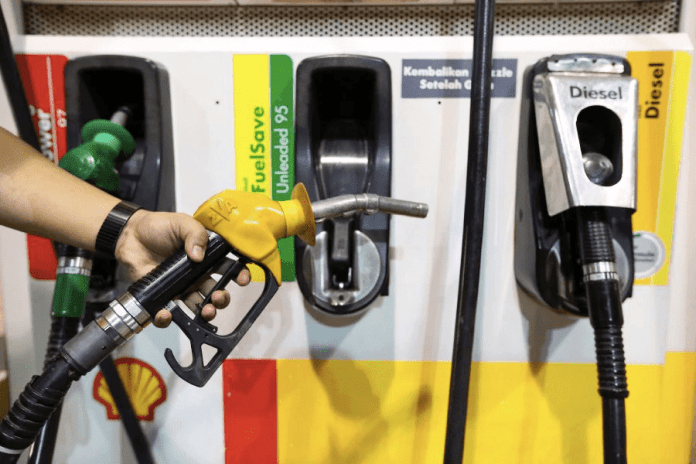
Rising oil prices are increasingly shifting economic pressure from inflation to government finances and external balances across Malaysia and other major Asian economies, with policymakers likely to face more difficult trade-offs in 2027, according to OCBC Global Markets Research.
In its latest ASEAN-5 & India report, OCBC said fuel subsidies, price stabilisation measures and administrative controls have so far limited the pass-through of higher global energy costs to consumers. However, these measures effectively transfer part of the burden to fiscal accounts and external balances.
Brent crude averaged US$87.87 per barrel between Jan 2 and Sept 14, 2026, up 76.8% year-on-year, but core inflation has remained relatively contained in several regional economies. Malaysia’s inflation has been particularly steady, reflecting subsidies and other measures that have cushioned households from the full impact of higher energy prices.
OCBC forecasts Malaysia’s headline inflation at 2.0% in 2026 and 2.1% in 2027, while core inflation stood at 2.0% year-to-date based on the latest available data.
The research house cautioned, however, that cost pressures are building as elevated energy prices coincide with El Niño-related food risks, higher agricultural input costs and geopolitical uncertainty. These factors could eventually intensify inflationary pressures even if the initial pass-through remains muted.
On the external front, OCBC said net energy importers such as Thailand, the Philippines, Vietnam and India are particularly vulnerable to higher crude costs. Malaysia, as a net commodity exporter, has greater protection, with commodity export growth picking up, although the overall terms-of-trade impact depends on movements in palm oil, rubber, crude petroleum and LNG prices.
Malaysia’s current account surplus is forecast to narrow to 1.4% of GDP in 2026 from 1.6% in 2025, before improving slightly to 1.6% in 2027. OCBC said current account positions across the region would remain under pressure if oil prices rise further and global demand weakens.
Fiscal pressures are another key concern. OCBC said Malaysia and Indonesia continue to rely significantly on fuel subsidy mechanisms, helping contain consumer inflation but reducing fiscal flexibility and diverting resources from other spending priorities.
For Malaysia, the report estimated that subsidies and other assistance would amount to around RM40 billion, equivalent to 1.8% of GDP. It noted that the government restored the Budi95 quota to 300 litres per month from Sept 1 and increased the Budi Madani Diesel quota to 400 litres per month as part of relief measures benefiting about 16 million recipients.
OCBC expects the full economic impact of elevated oil prices to emerge gradually over the next 12 to 18 months, as higher energy costs erode fiscal and external buffers rather than immediately generating a broad inflation shock.
Against this backdrop, the research house maintained its view that regional central banks will continue tightening monetary policy through 2026 and 2027.
For Malaysia, OCBC expects Bank Negara Malaysia’s Overnight Policy Rate to remain at 2.75% at end-2026 before rising by 25 basis points to 3.00% by end-2027. It also expects further tightening from Bank Indonesia, the Bangko Sentral ng Pilipinas, the Reserve Bank of India, the Bank of Thailand and the State Bank of Vietnam.
OCBC said the combination of high petroleum prices, potential food inflation from El Niño and resilient economic growth supports a continued tightening bias, while the more significant challenge for governments may increasingly be preserving fiscal and external buffers rather than managing immediate consumer inflation.


