


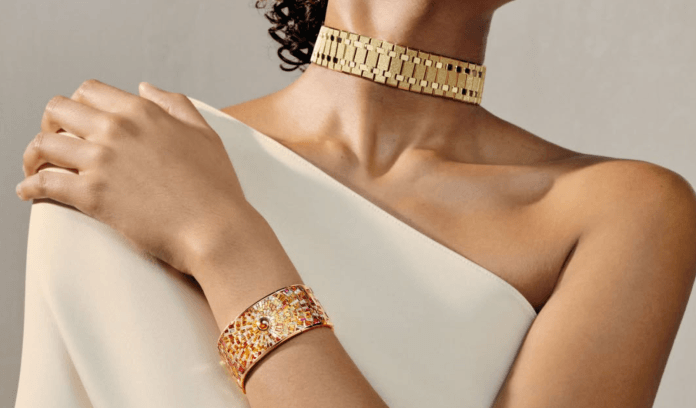
The Royal Oak has spent more than five decades defining what a luxury sports watch can look like. Now, Audemars Piguet is testing how far that design language can travel — and the answer is into jewellery.
The Royal Oak Joaillerie collection translates the watch’s most recognisable signatures — its octagonal geometry, sharp architecture and play of light — into necklaces, cuffs, chokers and earrings.
The result is a collection that retains the visual tension of the Royal Oak while moving it into a more sculptural, distinctly jewellery-led territory.
Rather than simply reproducing the familiar octagon in precious materials, the collection treats it as a starting point. Gold, titanium, ceramic, diamonds and coloured gemstones are used to manipulate the shape, texture and rhythm of the original design.
The pieces range from graphic and architectural to more fluid compositions inspired by the landscape surrounding Audemars Piguet’s home in Switzerland’s Vallée de Joux.
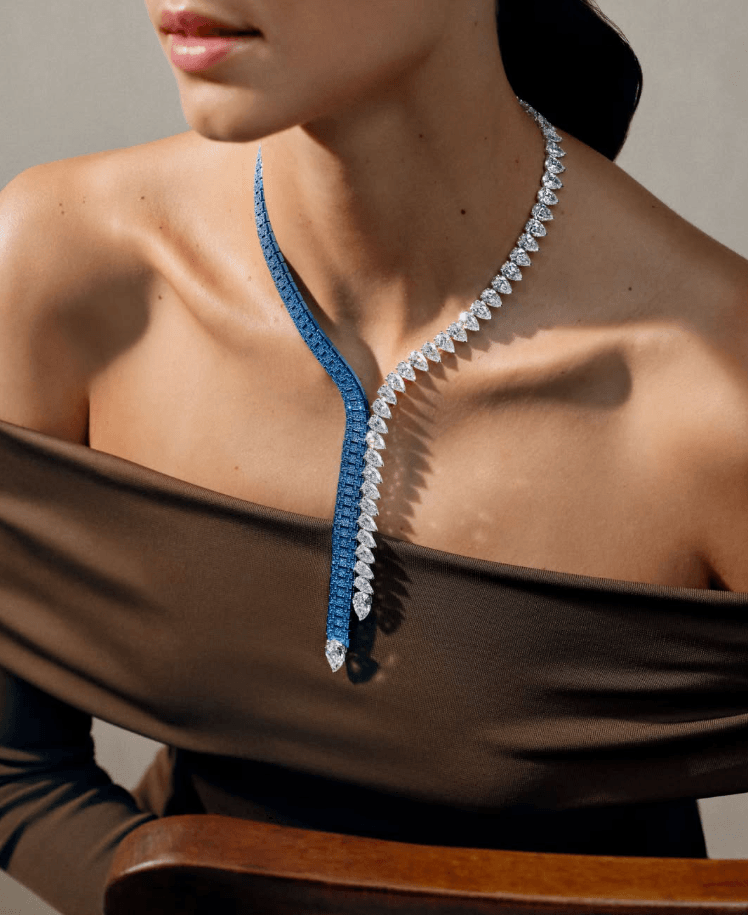
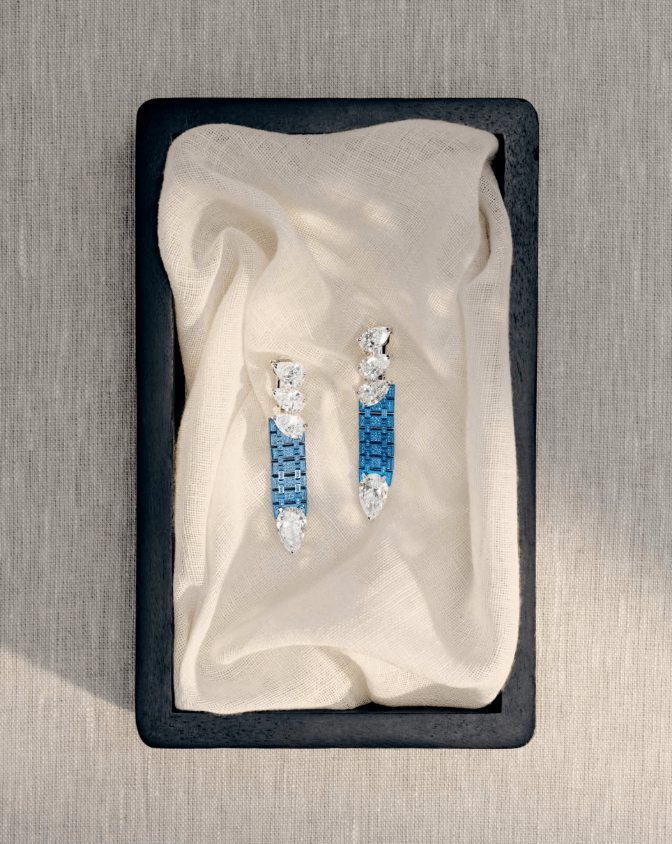
The Dream of Joux line takes its cues from that landscape, translating images of frozen lakes, night skies and natural forms into gem-set compositions. Pear-shaped diamonds and coloured stones appear across necklaces, earrings and cuffs, creating pieces in which the stones contribute to the structure rather than simply providing decoration.
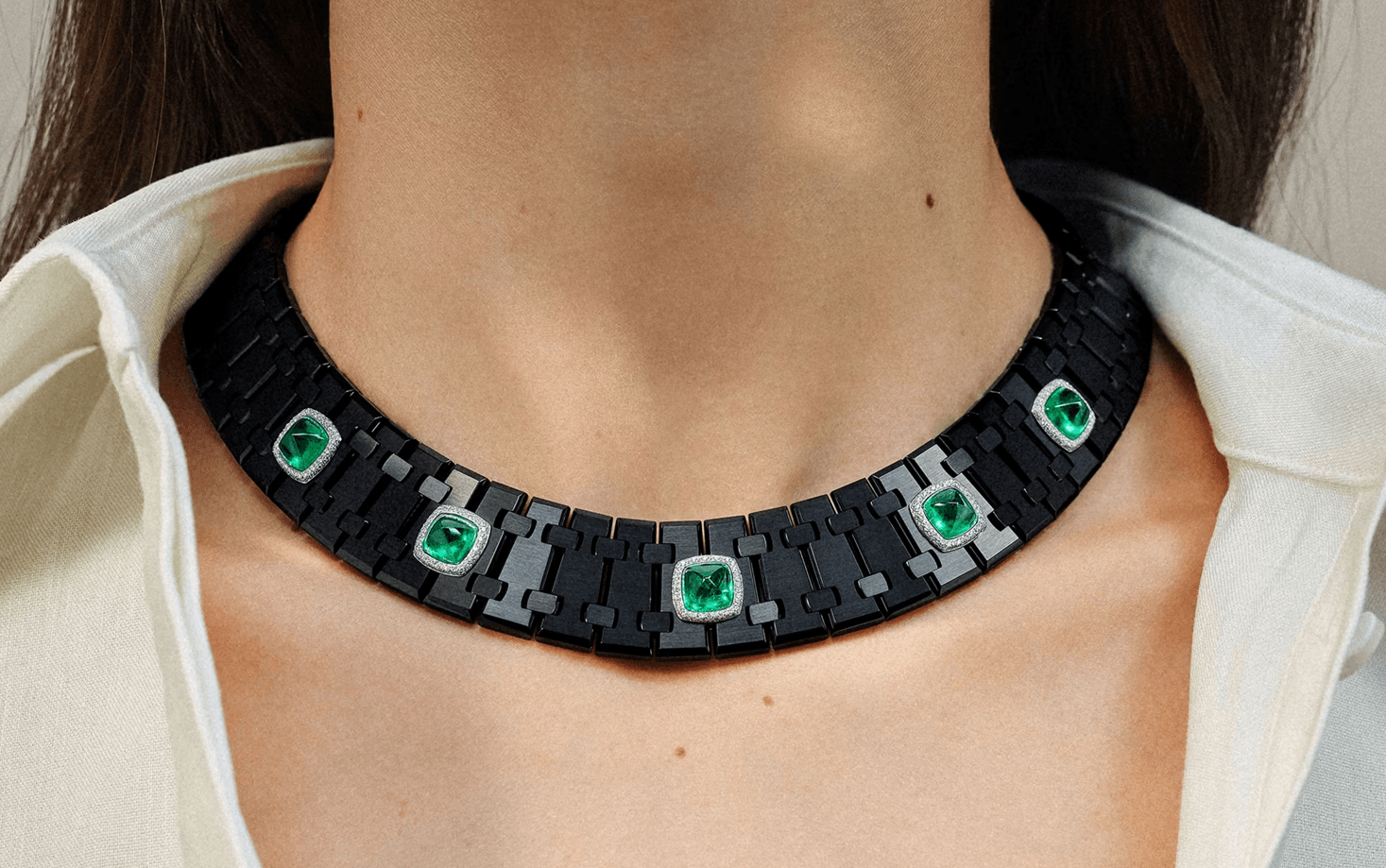
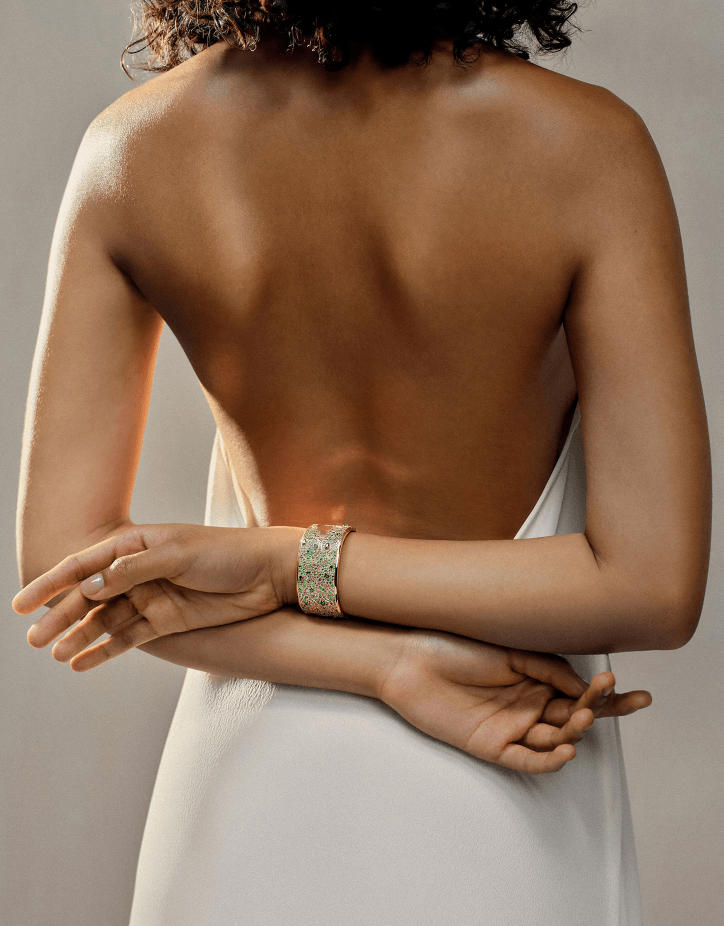
The mood changes with Risoud Eclipse, where black titanium and ceramic form a darker backdrop for emeralds framed by diamonds. Inspired by the Risoud Forest and the phenomenon of an eclipse, the pieces rely on contrast — black against green, matte surfaces against flashes of light — to create a more restrained interpretation of the Royal Oak’s geometry.
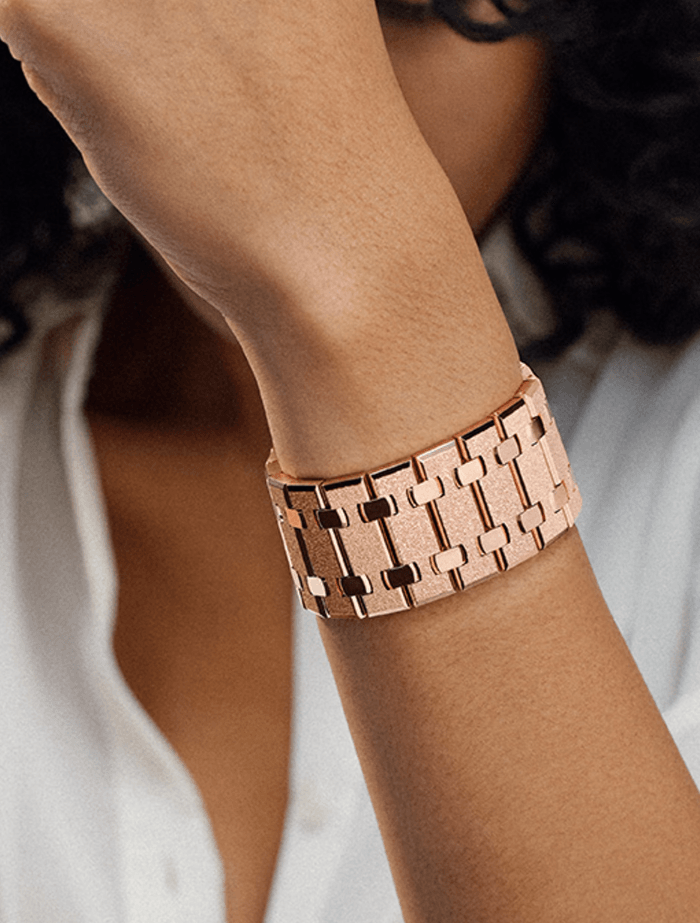
Then there is Frosted Gold, developed with jewellery designer Carolina Bucci. Its defining feature is not a gemstone but texture. Drawing on an ancient Florentine technique, the gold is worked to produce a finely granular surface that catches the light with a subtle, almost diamond-dust effect.
The finish appears across yellow, white and pink gold cuffs and chokers, giving the metal a softer visual character than conventional polishing.
The move into jewellery also taps into a much older part of Audemars Piguet’s history. Long before the Royal Oak arrived in 1972, the Swiss watchmaker was experimenting with the relationship between horology and jewellery.
Its archives include pendant, brooch and ring watches created with jewellery houses including Tiffany, Cartier, Oscar Heyman and Bvlgari, as well as the 1929 “Tutti Frutti” timepiece.
That dialogue continued into the 1980s with the creation of an in-house jewellery workshop and later collections that pushed further into decorative watchmaking and high jewellery. The Royal Oak Joaillerie collection therefore represents less of a break from the manufacture’s past than a contemporary extension of it.
What distinguishes the latest pieces is the decision to let the Royal Oak’s design codes stand on their own, without a dial or movement to anchor them. The octagon becomes an architectural device; finishing becomes a visual feature; gem-setting becomes another way of expressing the geometry.
It is a logical evolution for a design that has always occupied an unusual space between industrial construction and luxury. The original Royal Oak challenged the conventions of fine watchmaking by making its construction part of its identity.
The Joaillerie collection applies the same principle to jewellery, using structure, material and light as the main event.
More than simply putting the Royal Oak into a different category, the collection reveals how much of its identity was never dependent on telling time in the first place.


