


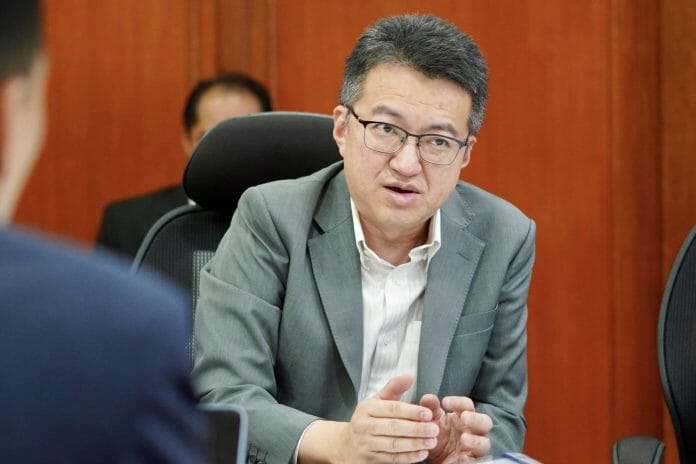
The ASEAN Economic Opinion Leaders Conference, held on Jan 8, 2025, at Dewan Perdana, MITI, Kuala Lumpur, opened with remarks from Liew Chin Tong, Deputy Minister of Investment, Trade and Industry (MITI), as he highlighted the critical economic shifts and challenges that ASEAN will face in the coming years. The conference, a result of discussions between Liew and ASEAN Economic Community Deputy Secretary-General Satvinder Singh, aims to chart a strategic course for ASEAN amid a complex global landscape.
In his speech, Liew underscored the ongoing “poly-crisis” that has affected the world since the Covid-19 pandemic. Geopolitical tensions, financial volatilities, and environmental crises have compounded the global economic outlook. As the world faces a host of intertwined challenges, Liew warned that traditional business models would no longer suffice and that ASEAN must adopt bold strategies to ensure regional stability and prosperity.
Liew identified three pivotal shifts impacting the global economy: a move away from cheap outsourcing towards resilience in supply chains, the growing intersection of economics, politics, and security, and the limitations of export-led industrialisation. He stressed that ASEAN must adapt to these shifts, particularly in terms of fostering a more diversified, resilient supply chain and reducing dependency on the US market.
Furthermore, Liew shared his vision for ASEAN by 2045, which revolves around three core goals: positioning ASEAN as a regional supply chain hub, becoming a prosperous middle power, and emerging as a vibrant middle-class society with a robust consumer market. He pointed to the potential of the Johor-Singapore Special Economic Zone (JS-SEZ) as a model for ASEAN-wide cooperation, aiming to foster greater regional integration and joint investment projects.
The Deputy Minister also stressed that ASEAN must not engage in a race to the bottom in terms of wages and tax incentives but instead focus on sustainable economic growth that benefits all. He called for unity within ASEAN, encouraging member states to uphold environmental standards and collaborate to create a thriving middle-class economy. The push for inclusivity and sustainability, as outlined in Malaysia’s ASEAN Chairmanship 2025, was a key theme throughout Liew’s address.
Liew concluded with hopes for ASEAN’s continued growth and solidarity, emphasising the importance of working together as a collective force to navigate the increasingly volatile global economy. He also expressed gratitude to conference sponsors and participants, particularly from around ASEAN, for their commitment to making the event a success.

