Imagine lowering your water and energy use just by wearing your clothes more often. That’s the vision behind Ultifresh, a Singapore-based company using advanced antimicrobial technology to reduce the need for frequent washing. The result? Cleaner clothes, fewer washes, and a major step toward sustainable living.
Ultifresh was founded by Frank Yap and Gerald Eng with a simple idea: to solve common hygiene problems through innovation. What started as a practical solution has grown into a movement—one that’s challenging the fashion industry to rethink its impact on the planet.
Harnessing Technology for Environmental Impact
Ultifresh’s unique value proposition lies in its anti-microbial, anti-odour fabric technology, which the founders argue is no marketing gimmick. Their solution ensures clothing remains fresher for longer, drastically reducing the frequency with which garments need to be washed.
“Performance and sustainability are two sides of the same coin—our core innovation is the performance that drives sustainability. By keeping clothes fresh, we eliminate the biggest environmental impact of a garment’s life: constant washing and drying,” Frank explained.
The ripple effects are significant: less frequent washing leads not only to water and energy savings, but also to longer-lasting garments and fewer microplastics shed into the environment.
The founders cite rigorous third-party testing to back their claims, including certification from Intertek UK for anti-bacterial efficacy and SGS for anti-odour performance, with fabrics reportedly retaining over 90% anti-bacterial protection even after 50 washes.
Sustainability as Strategy, Not Slogan
What sets Ultifresh apart is not just its fabric technology, but its commitment to measurable sustainability. “We don’t believe in greenwashing,” says Gerald Eng. Ultifresh fabrics are SGS tested and OEKO-TEX certified, ensuring that no harmful chemicals are used and that the production process meets strict environmental standards.
The team has gone a step further by integrating recycled polyester into their supply chain, reducing their dependency on virgin materials. Additionally, Ultifresh works with partners who embrace closed-loop water systems and lower carbon footprints. “Our sustainability is built into the DNA of our product, not tacked on for marketing,” Eng adds.
Resilience, Longevity, and Honest Answers
Rather than over-promising, Frank emphasises honest communication about garment longevity and care. The shirt lasts as long as any well-constructed shirt, he acknowledges, but less frequent washing extends the lifespan significantly.
For those with jobs or lifestyles encountering heavy dirt or stains—such as hikers or foodservice workers—Ultifresh gear might not permit skipping every wash, but the option is always there for wearers to choose sustainably when possible.
Water Conservation at Scale
Ultifresh’s impact is quantifiable. The founders calculate that every wash saved conserves roughly 2–4 litres of water per shirt. With millions of garments in circulation, they estimate the potential water savings at a staggering 50 million litres per day if the apparel is worn and re-worn as recommended.
The water issue is particularly resonant in markets like Penang, where water scarcity is a persistent challenge, and one where Ultifresh’s solution directly addresses a pressing everyday concern.
From Singapore Roots to Regional Growth
Ultifresh began its journey in Singapore, quickly expanding into Malaysia as both founders saw the opportunity to impact wider communities suffering from water stress. “We didn’t initially set out to become a sustainable company,” Frank Yap explains, “but as we developed the product, it became clear that environmental responsibility had to be part of the equation.”
Over the years, Ultifresh has grown from niche player to market disruptor. From RM100,000 in revenue in 2018, the company soared to approximately RM30 million by 2024, selling over 13.3 million sustainable t-shirts and expanding its distribution to six countries.
The company’s operations boast a China-based production facility with the capacity to deliver up to 2–3 million pieces a year, supported by a Johor Bahru warehouse holding two million units at any given time.
Navigating Challenges and Changing Perceptions
Despite their success, the journey hasn’t been without hurdles. One of the toughest challenges has been convincing stakeholders that sustainability is not a luxury, but a necessity. “In the early days, many clients didn’t want to pay a premium for sustainable products,” Yap recalls. “But attitudes are changing, especially among younger consumers and forward-thinking businesses.”
Ultifresh has also had to fight misconceptions about sustainable clothing being uncomfortable or unfashionable. Their response? Stylish, versatile apparel that’s as comfortable in the boardroom as it is in the tropics—all while maintaining a transparent environmental footprint.
A Message for Investors and Collaborators
Interestingly, Ultifresh’s journey to date has taken place without the backing of corporate investors. Frank and Gerald hope this grassroots, mission-driven approach will inspire others to work alongside them, stressing the need for partners who share their environmental convictions, particularly in markets facing acute water shortages and extreme weather.
Owning their own factory and controlling end-to-end production has enabled Ultifresh to keep prices affordable, furthering their vision for accessible, sustainable apparel.
Expanding Sustainable Consumption Avenues
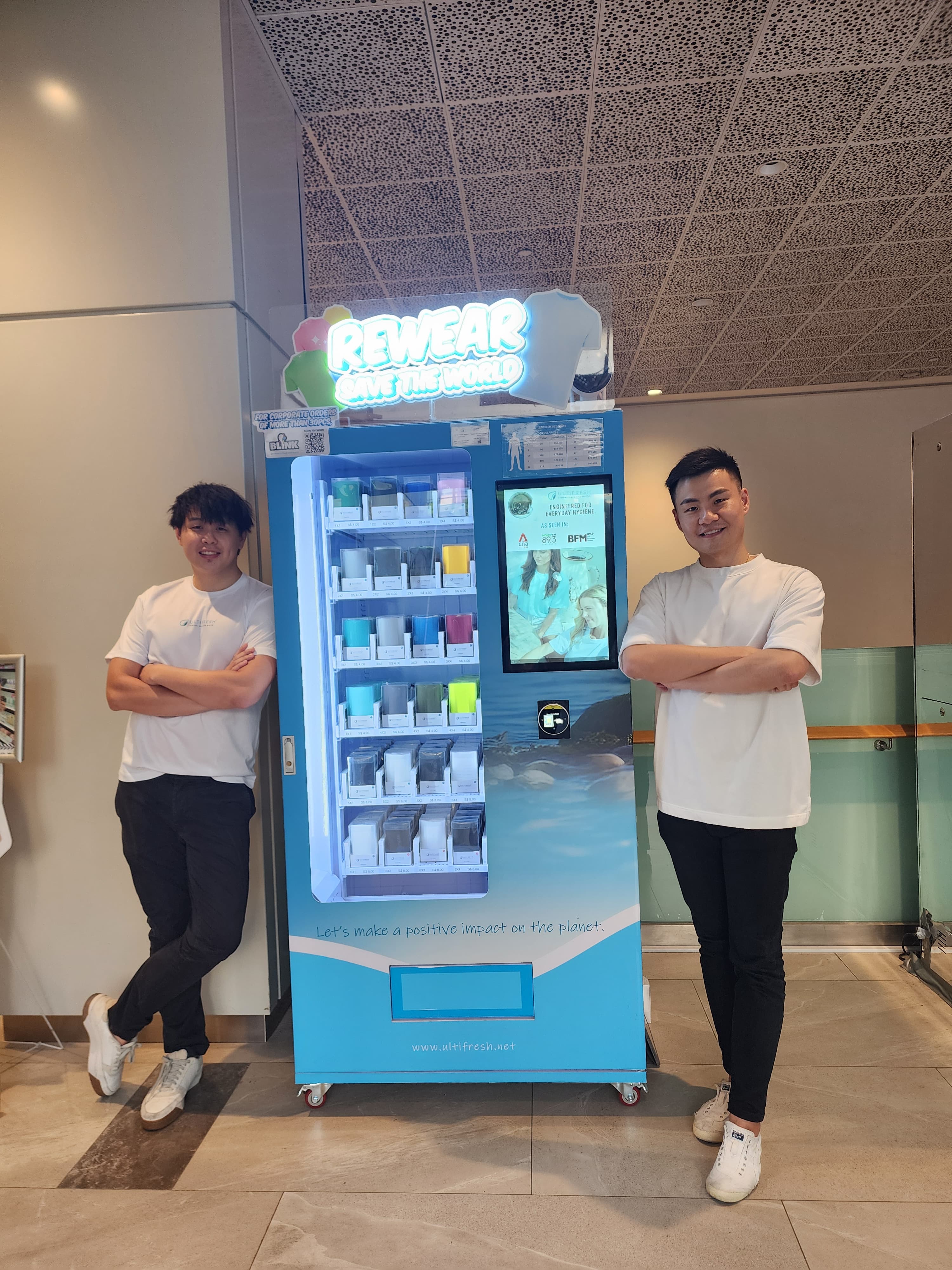
Striving for both accessibility and environmental responsibility, Ultifresh has branched into innovative distribution channels. The introduction of apparel vending machines—first in Singapore, now rolling out to schools and shopping centres in Malaysia—aims to blend convenience with a lower environmental footprint.
These machines, operating around the clock and consuming far less space and energy than traditional retail stores, are part of the company’s broader strategy to make sustainable consumption easy and mainstream.
Additionally, Gerald outlined ambitions to bring the brand’s solutions to water-stressed regions globally, including Africa and India, leveraging the vending machine model as a catalyst for faster market entry. The B2B sector will remain a firm priority, but direct-to-consumer innovation is catching up quickly.
A Brand Rooted in Southeast Asia, Ready for Global Stages
Though the company’s footprint is expanding, Ultifresh remains deeply rooted in its Southeast Asian identity. “We understand the needs of people who live in hot, humid climates because we’re from here,” Yap says. That insider perspective gives Ultifresh an edge when designing fabrics and garments that perform well in tropical conditions.
The founders are also keenly aware of the broader environmental challenges facing Asia, such as textile waste and water pollution. “As entrepreneurs, we have a responsibility to be part of the solution,” Eng says. This ethos has guided every expansion decision—from material sourcing to choosing regional manufacturing partners who align with their values.
Looking Ahead: Scaling with Integrity
As they look to the future, Yap and Eng are focused on scaling responsibly. That means expanding their product line, investing in R&D, and continuing to educate consumers and partners on the value of sustainable fashion. They’re also exploring blockchain-based traceability tools to provide even greater transparency in the supply chain.
But for all their ambitions, the founders remain grounded. “We’re not trying to be the biggest,” says Eng. “We just want to be the most trusted in this space.”