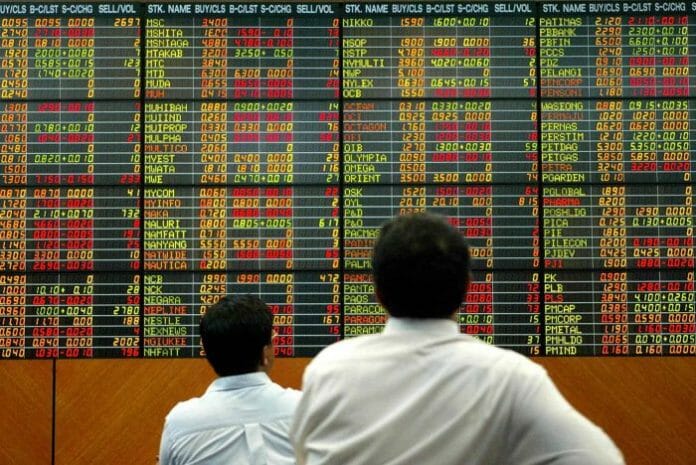
Asian markets advanced on Wednesday after a sharper-than-expected slowdown in US inflation eased concerns over further interest rate increases, while strong earnings from major US banks added to investor optimism.
South Korea’s chip-heavy KOSPI led regional gains, surging 6% in early trade, while Japan’s Nikkei rose 0.4%. MSCI’s broadest index of Asia-Pacific shares outside Japan climbed 1.7%.
The positive sentiment followed US inflation data showing the headline Consumer Price Index (CPI) fell 0.4% in June, marking its first monthly decline since the Covid-19 pandemic. Core inflation stood at 2.6% year-on-year, below market expectations of 2.8%.
The softer inflation figures reduced expectations of further Federal Reserve rate hikes, with markets pricing in the likelihood of a July rate increase falling to 16%.
“For market bulls this is even better than Goldilocks could have imagined,” J.P. Morgan analysts said in a client note.
“Inflation (is) lower with positive earnings growth. This print should remove any fears over a July rate hike and may assuage fears on September, too. This sets up the market to move higher and to broaden as it does so.”
Investor confidence was also supported by strong earnings from Wall Street banks, although a sharp 25% fall in IBM shares after the technology company issued a weaker revenue outlook highlighted ongoing concerns over stretched valuations in artificial intelligence-related stocks.
Overnight, the Nasdaq Composite gained 0.9% while the S&P 500 rose 0.4%, with US futures edging slightly higher during Asian trading hours.
In currency markets, the US dollar weakened against most major currencies except the Japanese yen, which remained under pressure. Short-term US Treasury yields also declined, with two-year yields falling 11 basis points to 4.19% after touching a 17-month high of nearly 4.3% on Tuesday.
The euro held above US$1.14, while the Australian dollar maintained a 0.8% gain and tested the US$0.70 level.
Meanwhile, oil prices stabilised around US$85.50 a barrel after gaining more than 12% this week amid renewed tensions in the Middle East. Oil markets were supported by concerns over disruptions in the Strait of Hormuz, although US President Donald Trump dropped plans to impose a 20% fee on shipping through the key waterway.
Investors are now awaiting China’s second quarter gross domestic product, industrial production and retail sales data, which will provide further clues on the strength of the world’s second-largest economy.
Markets will also focus on earnings from Europe’s most valuable company, ASML, the world’s largest supplier of equipment used to manufacture AI chips, alongside upcoming US corporate results from BNY, Johnson & Johnson and BlackRock.