



The End of Oak Street is the kind of film that makes me wish its first half was as good as its second.
First half of The End of Oak Street: Anne Hathaway with those bangs. Chef’s kiss.
Second half of The End of Oak Street: Anne Hathaway with the gun that bangs. Chef’s kiss.
Somewhere between those two Anne Hathaways is a film I really wanted to love more than I ultimately did.
Directed by David Robert Mitchell, the filmmaker behind It Follows and Under the Silver Lake, and produced by J.J. Abrams, The End of Oak Street takes a wonderfully bizarre premise and drops it into suburban America.
After a mysterious cosmic event rips Oak Street out of suburbia and transports the neighbourhood somewhere unknown, the Platt family discovers that survival depends on them sticking together as they navigate a world that has become completely unrecognisable.
And yes, there are dinosaurs.
Lots of them.
But surprisingly, I think The End of Oak Street works better as a family adventure than it does as a dinosaur movie.

The first half takes its time
The biggest problem for me is the first half.
Mitchell spends a considerable amount of time building suspense around what exactly has happened to Oak Street. Strange details gradually creep into the otherwise ordinary suburban environment, creating this sense that something is fundamentally wrong.
The problem is that the suspense never quite reaches the level the film wants it to.
It keeps teasing that big moment where everything falls apart, but the build-up feels more deliberate than genuinely tense. I understand what Mitchell is trying to do, especially with the mystery surrounding the cosmic event, but I found myself waiting for the movie to get to the good stuff.
Thankfully, it does.
And once it does, The End of Oak Street becomes considerably more fun.
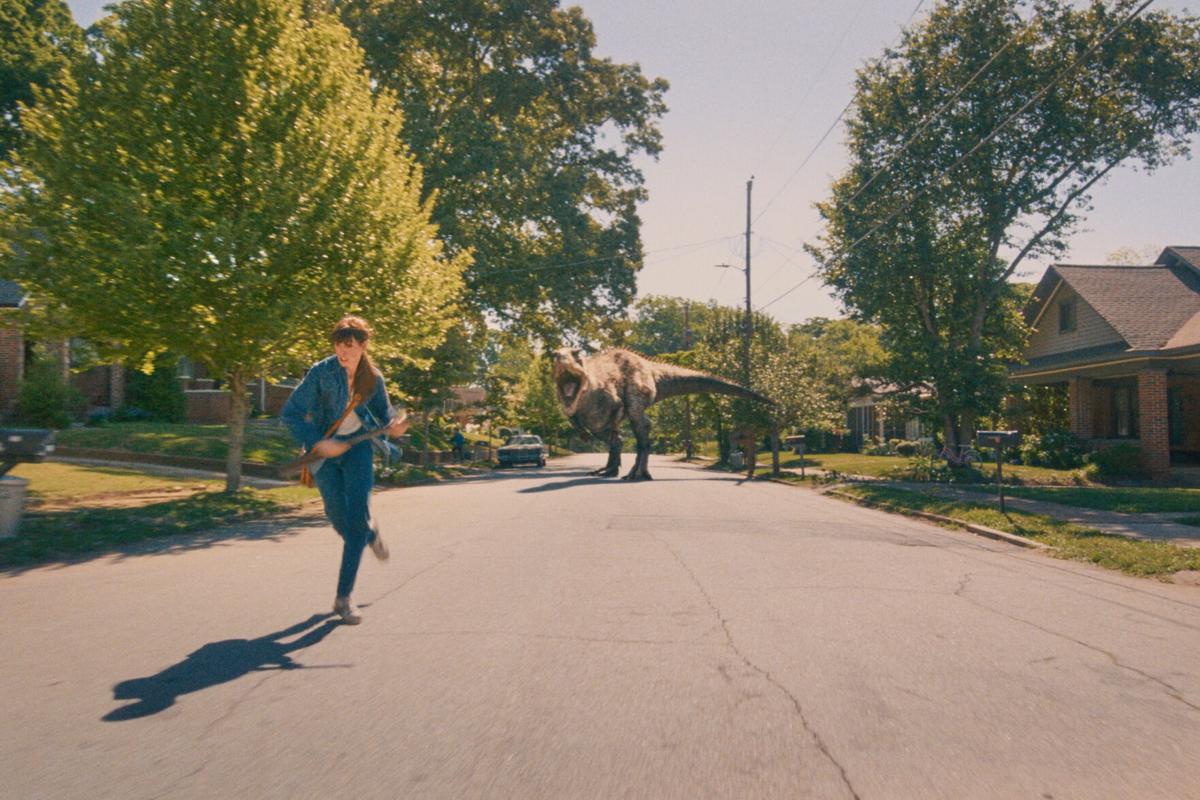
Once the dinosaurs arrive, the movie comes alive
The second half is where the film finally finds its rhythm.
The dinosaurs get more room to wreak havoc, the action becomes more inventive and the Platt family’s fractured dynamics start paying off. There is one particular oner that is fantastic, giving the action a sense of geography and movement that is increasingly rare in modern blockbusters.
Rather than chopping everything into a million edits, Mitchell allows the sequence to play out and lets us understand where everyone is.
That is old-school blockbuster filmmaking.
And it works.
This is also where I understand the critics who were considerably more enthusiastic about the film than I was. RogerEbert.com’s Zachary Lee gave it a perfect 4/4, praising the film for bringing together its family drama, apocalypse story and dinosaur spectacle into something he considered a genuine movie miracle. Polygon similarly described it as an Amblin-style adventure that feels like the kind of film you would stumble across on television and immediately watch until the end.
The Associated Press called it a “gonzo good time”, while Empire praised its set pieces and argued that it manages to out-dino some of the more recent Jurassic entries. Those are strong endorsements, and I completely understand where they are coming from.
I just needed the movie to get there sooner.
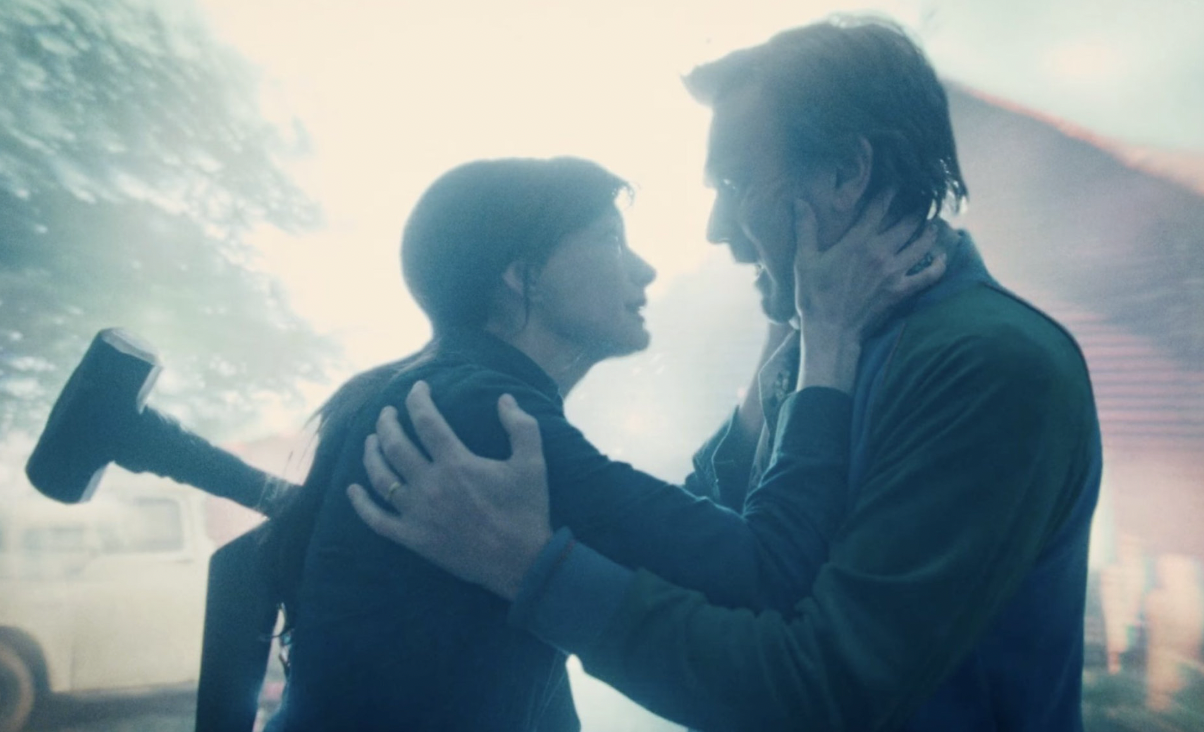
This is Spielbergian done right
The Spielberg comparisons are impossible to avoid.
And for me, this is where The End of Oak Street gets particularly interesting.
I reviewed Spielberg’s Disclosure Day earlier this year and, while I appreciated aspects of that film, it never quite gave me the Spielberg experience I was hoping for.
Ironically, David Robert Mitchell has made the better Spielberg homage.
Not because The End of Oak Street is better than Jurassic Park. It absolutely is not.
But Mitchell understands what makes Spielberg’s 1980s family adventures work.
The children. The suburban setting. The dysfunctional family. The sense of wonder. The danger invading an otherwise ordinary home. The strange lights. The creatures. The mixture of humour, fear and sentimentality.
It is not simply copying the visual language. It understands the emotional language.
The film feels like someone took the DNA of E.T., Close Encounters of the Third Kind, The Goonies and Jurassic Park, put it through a blender and then dropped a suburban neighbourhood into the Early Cretaceous.
Vulture described the film as effectively slamming Jurassic Park into Close Encounters of the Third Kind, while IndieWire praised it as a nostalgic but not reactionary blockbuster that understands what audiences want from this kind of summer adventure.
And that is exactly why I enjoyed its 1980s aesthetic.
It is nostalgic without constantly screaming, “Remember this?”
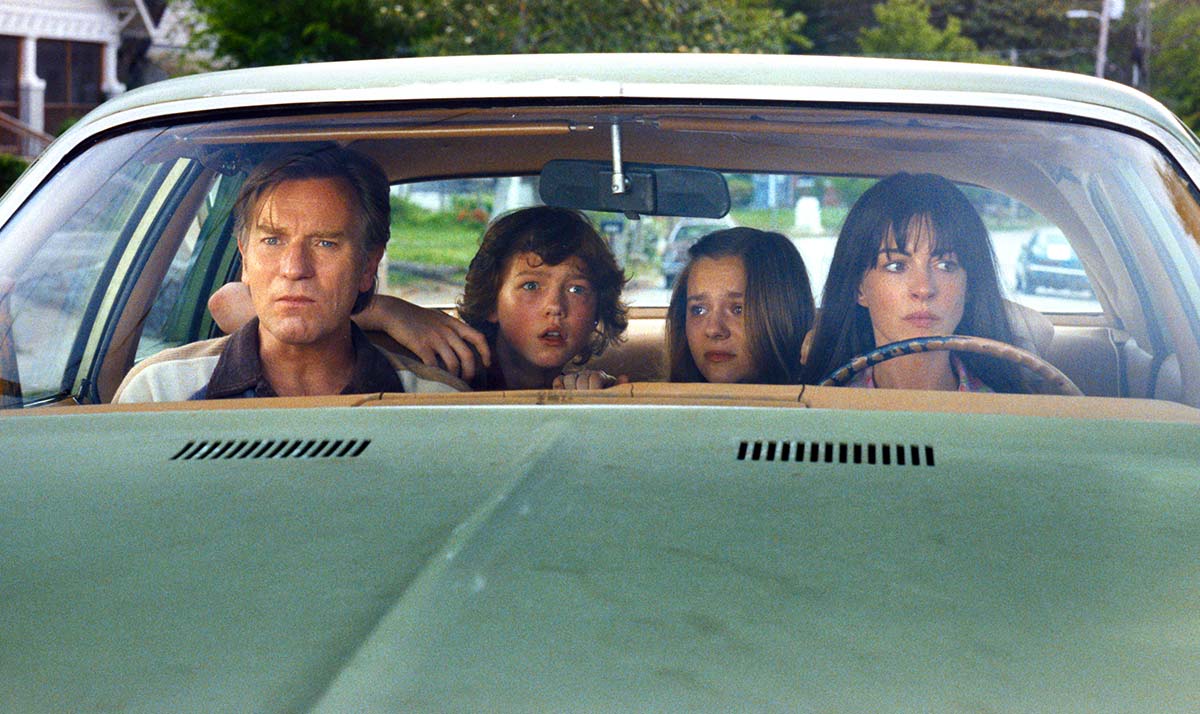
A surprisingly good family movie
The dinosaurs might be the marketing hook, but the family is the heart of the film.
The Platts were already struggling before their neighbourhood was ripped out of suburbia. The cosmic event simply forces them into a situation where they cannot avoid each other anymore.
That gives the film an unexpectedly sincere emotional core.
Screen Daily highlighted Anne Hathaway’s Denise as the character carrying much of the film’s emotional weight, particularly through its exploration of parenthood and the everyday heroism of trying to hold a family together. The AU Review similarly noted that Mitchell seems more fascinated by the family inside the house than the dinosaurs outside it.
And yes, Anne Hathaway is easily the standout.
She has the emotional responsibility of the movie on her shoulders, but she also gets to become an absolute badass once the dinosaurs arrive.
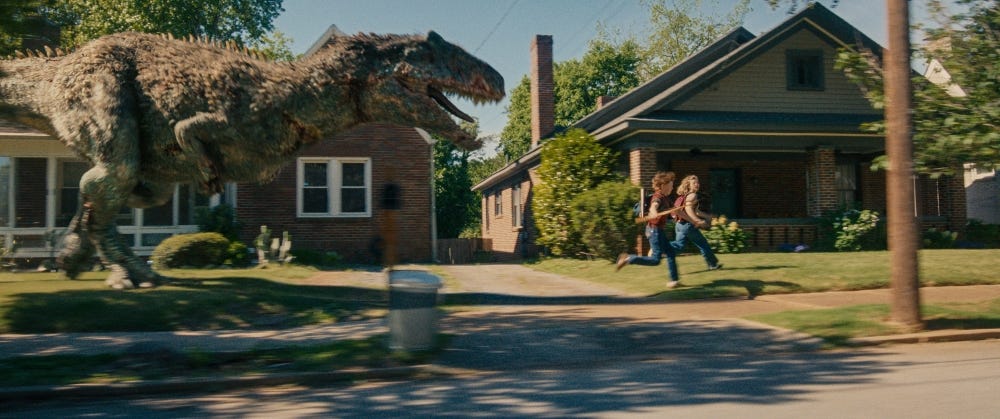
Feathered dinosaurs? Thank you
I also have to give Mitchell credit for committing to the idea that dinosaurs had feathers.
I appreciate this immensely.
After decades of pop culture teaching audiences that dinosaurs should look like giant scaly monsters, it is refreshing to see a blockbuster actually embrace more modern palaeontological understanding.
The film also chooses dinosaurs from the Early Cretaceous rather than simply assembling the greatest hits from Jurassic Park.
It is a small detail, but one that tells me Mitchell actually cares about making a dinosaur movie rather than simply making another Jurassic clone.
And when the dinosaurs work, they really work.
The raptors are nasty. The larger creatures feel imposing and the film occasionally gets surprisingly brutal for a PG-13 adventure.
Deadline praised the film’s willingness to push the rating with its dinosaur violence, while other critics have highlighted the creature work and set pieces as among the movie’s strongest elements.
I just wish there had been more of it.
Because despite all this praise for the dinosaurs, I still came away thinking:
Meh, dinosaur movie.
The split-diopter shots actually mean something
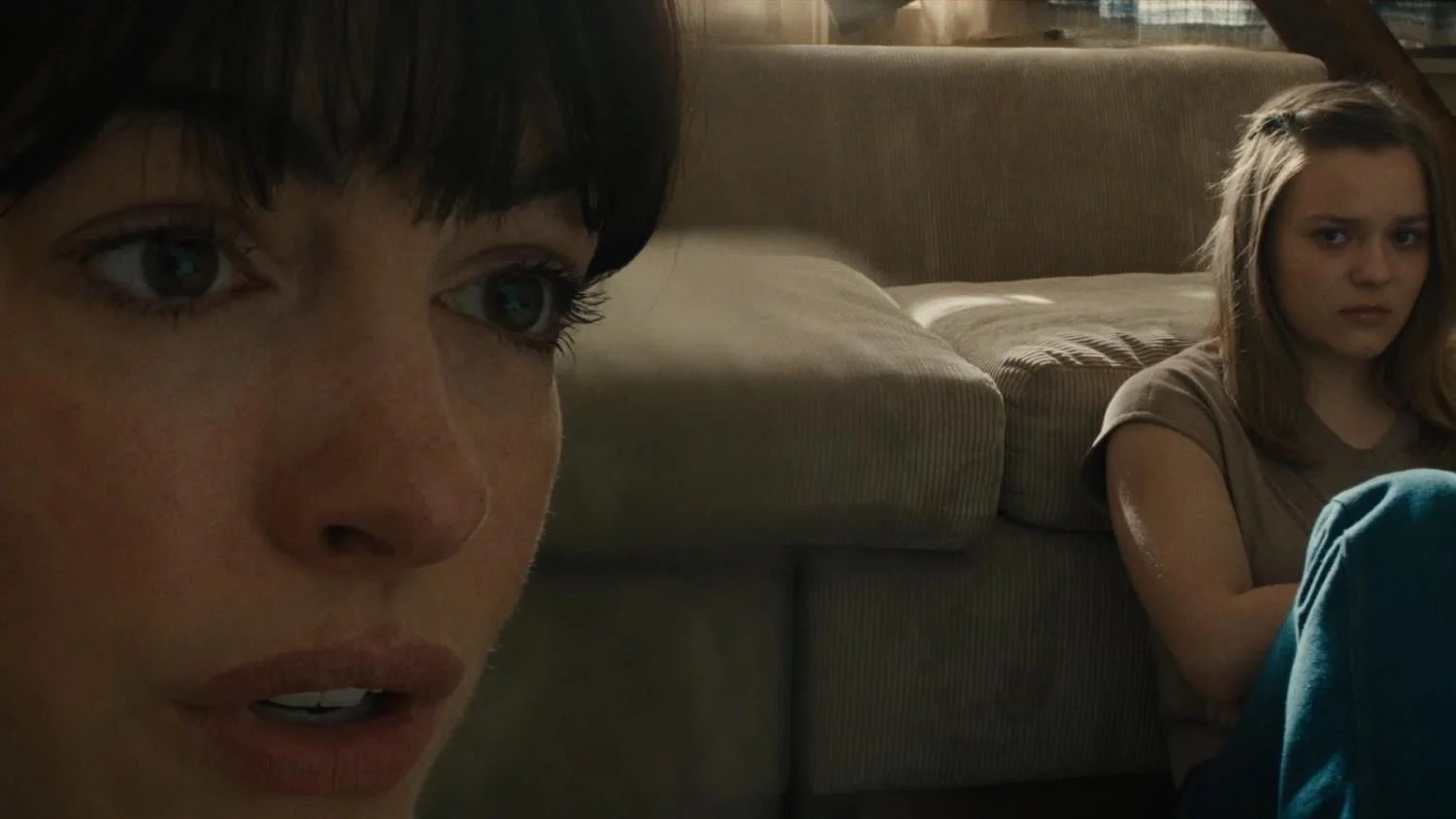
I have become weirdly conscious of split-diopter shots this year.
After watching Lee Cronin’s The Mummy, where I felt the technique was used a little too often, and Polong, which I thought used it very nicely, I was immediately noticing Mitchell’s use of the same technique here.
The difference is that The End of Oak Street uses it wisely.
The film has plenty of split-diopter compositions, but they rarely feel like Mitchell is simply showing off.
They are particularly effective during the dramatic scenes.
When two characters are standing close to each other but emotionally disconnected, the technique allows Mitchell to keep both faces and the surrounding action in focus. During the more intimate family moments, it becomes part of the emotional language of the scene.
That is where the technique works best.
The Mummy sometimes made me think, “Okay, we get it, you have a split diopter.”
Polong made me think, “That’s a nice use of one.”
The End of Oak Street made me think, “Oh, this actually serves the scene.”
And that is the difference.

The little things make it work
There are plenty of smaller details that I enjoyed.
The 1980s production design.
The old-school framing.
Michael Giacchino’s score leaning into that John Williams-esque adventure language.
The weirdness of the premise.
The willingness to get bloody.
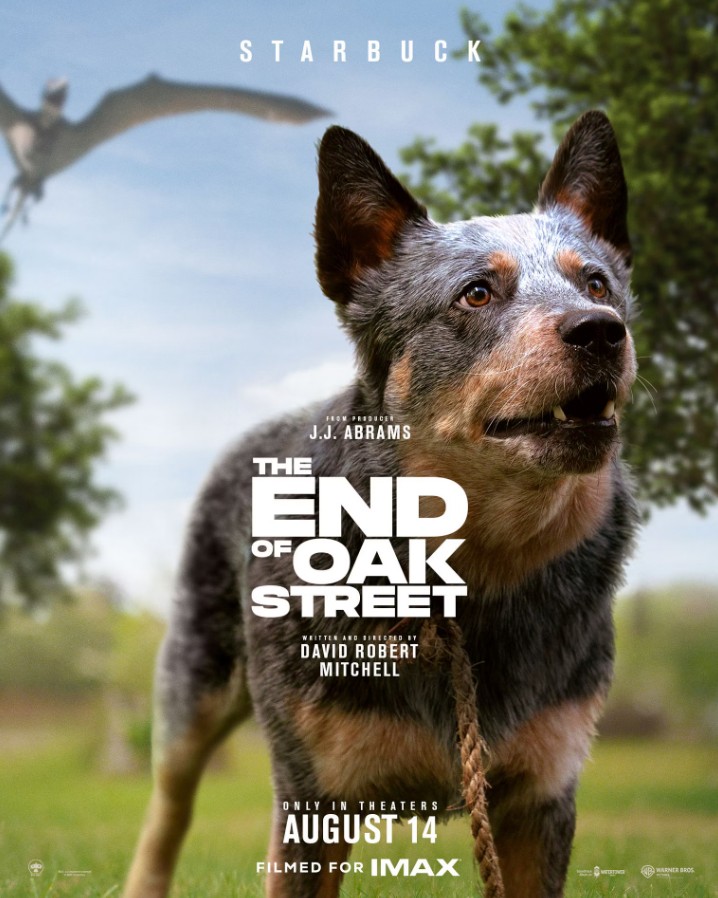
And, obviously, great doggo. You’ll know why.
No further questions.
There is also one scene that was censored for the Malaysian theatrical release, which is amusing because the same material will apparently be available through another medium anyway.
So, technically, nobody is really missing anything.
And then there is my personal headcanon that this somehow exists in the Cloverfield universe alongside Overlord.
I know it does not.
I know.
But I will continue believing.
My Project Zomboid brain also absolutely lit up when the sledgehammer came out.
My Zomboid soul was screaming.

The critics loved it more than I did
This is probably where my 6/10 will look slightly harsh compared with the broader critical response.
At the time of writing, The End of Oak Street sits at around 84% on Rotten Tomatoes, 67 on Metacritic and 6.6 on IMDb.
Some of the strongest critical reactions include:
- RogerEbert.com – 4/4: Zachary Lee called it an unusually ambitious combination of family drama, apocalypse and dinosaur spectacle, describing it as a movie worth returning to.
- SlashFilm – 10/10: praised its optimism and its use of genre cinema to process loss and find a way forward.
- Polygon – 91/100: called it an Amblin-style suburban adventure and one of the summer’s unexpected blockbusters.
- Vulture – 90/100: highlighted its collision of Jurassic Park and Close Encounters of the Third Kind.
- IndieWire – A-: praised the film’s nostalgic but non-reactionary approach to the Spielberg-era blockbuster.
- Empire – 4/5: argued that the film’s Spielberg influences are obvious but that its dinosaur set pieces can surpass recent Jurassic films.
- The Irish Times – 4/5: enjoyed the film’s energy but noted that the screenplay stumbles when trying to explain its strange premise.
- The Independent – 4/5: praised its originality, its darker edge and, importantly, its correctly feathered dinosaurs.
- The Guardian – 2/5: was considerably less impressed, arguing that the film’s Spielbergian influences sometimes feel more like pastiche than genuine inspiration.
That last criticism is probably the one I disagree with most.
Because I do think the Spielberg homage works.
It just does not work consistently enough for me to give the film the kind of score some of those critics have given it.
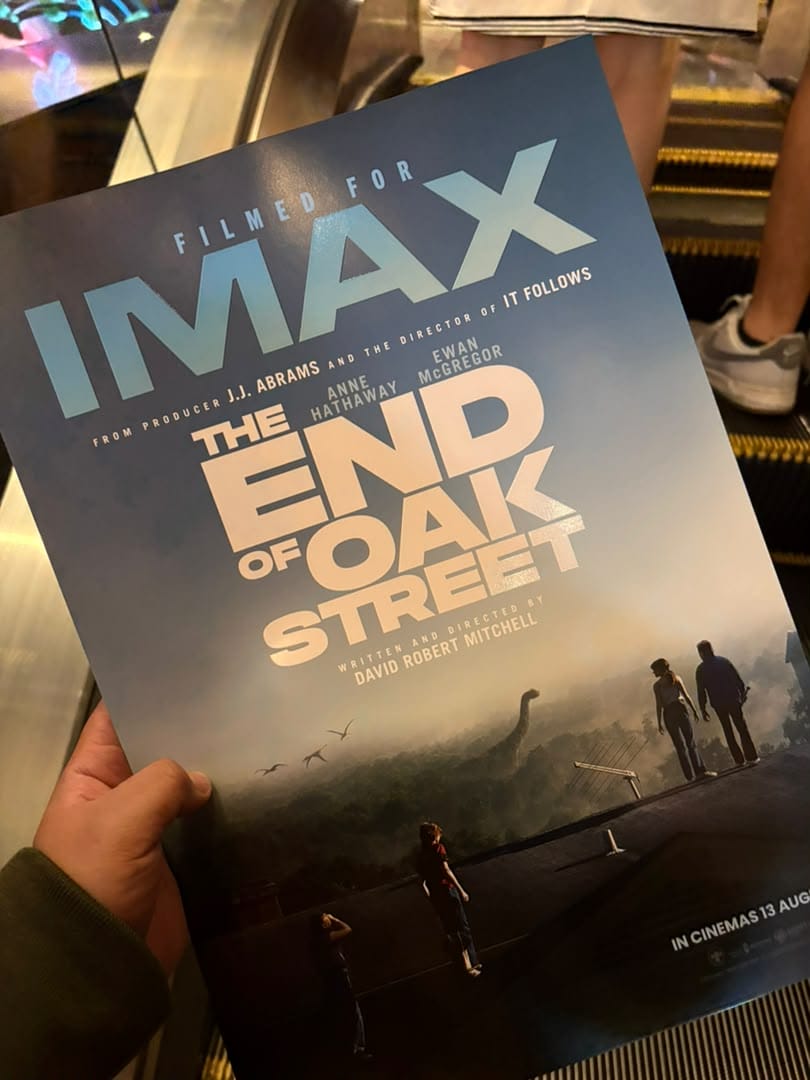
So, is it the dinosaur movie we have been waiting for?
No.
Not for me, anyway.
It is not Jurassic Park.
It does not have the same sense of awe, nor does it have enough dinosaur material to completely satisfy the prehistoric itch.
But it is something arguably more interesting: an original blockbuster that understands why those old family adventure movies worked in the first place.
The first half is too slow and the mystery does not entirely justify the patience required to get through it. Some of the logic is deliberately vague, and even the critics who loved the film have acknowledged that its central mystery does not always make complete sense. The Irish Times specifically noted that the screenplay stumbles when it attempts to explain exactly what has happened.
But the second half?
That is where The End of Oak Street finally becomes the movie I wanted it to be.
It is fun. It is sincere. It has dinosaurs. It has Anne Hathaway with a gun. It has a great dog. It has some genuinely excellent filmmaking.
And, most importantly, it feels like somebody actually remembers what a Spielberg family blockbuster felt like.
Which makes it all the more amusing that, for me, this is a better Spielberg homage than Spielberg’s own Disclosure Day. At least, that’s my personal opinion.
6/10.


