


As HYROX, IRONMAN, marathons and high-intensity fitness events surge in popularity, specialised cardiovascular assessment can help people pursue ambitious goals more safely.
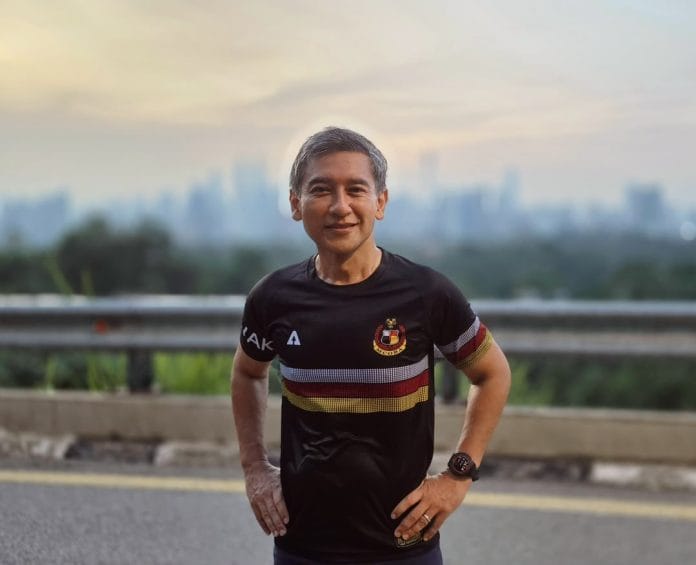
By Dato’ Sri Dr Azmee Mohd Ghazi
The sight of an athlete collapsing during competition is deeply unsettling because it challenges one of our strongest assumptions: that a fit-looking person must have a healthy heart. A widely circulated report of a HYROX competitor collapsing during a recent event in Bangkok has again put this concern in focus. Whatever the eventual clinical details, the moment should not frighten people away from exercise. It should prompt a more mature conversation about how we prepare for increasingly demanding sport.
Across Malaysia and the region, the appetite for endurance and high-intensity competition has never been more visible. HYROX combines repeated one-kilometre runs with functional workout stations such as sled pushes, sled pulls, rowing and burpee broad jumps. IRONMAN demands sustained swimming, cycling and running. Marathons, ultra-distance races, long-distance cycling events and obstacle challenges are attracting not only elite athletes, but executives, parents, former sedentary adults and weekend fitness enthusiasts.
This is, on balance, a positive development. Regular physical activity lowers cardiovascular risk, improves blood pressure, glucose control, cholesterol, body composition and mental wellbeing. The message must remain clear: exercise is medicine. But as with any medicine, the right dose, the right preparation and the right assessment matter. A training plan downloaded from an app cannot assess the electrical system of the heart, identify an inherited heart-muscle disorder or determine whether breathlessness is simply deconditioning or a warning sign.
When fitness culture moves faster than health awareness
The modern amateur athlete often trains with professional ambition but without professional medical support. Wearable devices provide heart-rate zones, recovery scores and performance forecasts, creating a sense that the body is being closely monitored. These tools can be useful, but they are not diagnostic instruments and cannot rule out coronary artery disease, cardiomyopathy, dangerous rhythm disorders or structural abnormalities.
The risk is not confined to people who are obviously unwell. Some cardiovascular conditions remain silent until the heart is placed under substantial stress. In athletes under 35, concern may centre on inherited or congenital conditions, including hypertrophic cardiomyopathy, electrical disorders such as long QT syndrome, abnormal coronary artery origins, myocarditis and diseases of the aorta. Among athletes over 35, undetected coronary artery disease becomes a more important consideration, especially when high cholesterol, high blood pressure, diabetes, smoking, obesity or a strong family history is present.
High-intensity hybrid events deserve particular respect because they repeatedly alternate between running and resistance-based efforts. Heart rate and blood pressure may rise sharply, while excitement, heat, dehydration, inadequate recovery, recent viral illness and the temptation to chase a personal best can add further strain. This does not prove that HYROX is inherently more dangerous than other endurance sports; current evidence is not sufficient to make that claim. It does mean that preparation must match the physiological demand of the event.
Sports cardiology is not a certificate to compete
A sports cardiology assessment is not simply a medical clearance form. Nor can any screening programme promise that a cardiac event will never occur. Its purpose is to understand the individual athlete: the sport, training load, symptoms, personal and family history, cardiovascular risk factors and performance goals. Appropriate testing can then be selected and interpreted in the context of athletic adaptation.
That interpretation is crucial. Regular intensive training can enlarge the heart’s chambers or thicken the heart muscle in ways that may be entirely normal — often described as the ‘athlete’s heart’. However, similar findings can sometimes resemble disease. A clinician without sports-specific expertise may either miss a dangerous abnormality or over-diagnose a healthy adaptation, unnecessarily restricting an athlete from sport. Sports cardiology sits at this intersection of safety, diagnosis and performance.
Depending on age, symptoms, risk profile and sporting demands, assessment may include a detailed clinical evaluation, electrocardiogram, echocardiography and exercise testing. Cardiopulmonary exercise testing, commonly known as CPET or VO2 max testing, measures how the heart, lungs and muscles respond as exercise intensity increases. It can provide objective information on aerobic capacity, maximal heart rate and anaerobic threshold, while helping to investigate unexplained breathlessness or exercise intolerance. Advanced imaging or rhythm monitoring may be recommended when clinically indicated; not every athlete needs every test.
The value extends beyond finding disease. Objective assessment can reveal that an athlete is training above a sustainable threshold, recovering poorly or interpreting normal exertion incorrectly. It can also provide a baseline against which future symptoms or changes in performance can be judged. For someone already living with hypertension, a rhythm disorder, congenital heart disease or a previous cardiac event, sports cardiology can support a personalised exercise prescription instead of the outdated assumption that heart disease automatically means giving up sport.
An Asian benchmark based in Malaysia
Institut Jantung Negara recently became the only centre in Malaysia and across Asia to hold EAPC Centre Accreditation in Sports Cardiology. The European Association of Preventive Cardiology is a branch of the European Society of Cardiology, and its centre accreditation programme is designed to recognise and monitor the quality of cardiovascular preventive care against established standards.
This recognition is important not as a badge alone, but because it reflects the clinical pathways, multidisciplinary expertise and governance required for consistent care. IJN’s Sports Cardiology programme brings together cardiologists, imaging specialists, electrophysiologists, congenital heart specialists, exercise physiologists, physiotherapists and other relevant disciplines. The aim is not to tell people to stop exercising. It is to help them train, compete, recover or return to sport with better-informed decisions.
For Malaysia, the accreditation also has a wider significance. IJN is the nation’s heart specialist centre and a participating hospital under Malaysia’s Flagship Medical Tourism Hospital Programme. A dedicated, internationally benchmarked sports cardiology service expands the country’s offer beyond treatment of established disease. It positions Malaysia to serve professional athletes, active individuals, teams and sporting organisations from across the region seeking preventive assessment, complex diagnosis, performance guidance and safe return-to-play planning within a comprehensive cardiac centre.
Screen for the challenge you are preparing to face
IJN offers two dedicated screening pathways, calibrated to different activity levels and performance demands: a Sports Fitness Screening for general and recreational training, and a more comprehensive Sports Endurance Screening for those preparing for marathons, triathlons, HYROX and similar events. The endurance pathway includes more detailed evaluation such as electrocardiography, two-dimensional echocardiography and CPET/VO2 max assessment, together with relevant clinical and exercise-focused review.
Screening is particularly worth considering for anyone returning to strenuous exercise after years of inactivity; preparing for a first marathon, triathlon, HYROX or long-distance cycling event; increasing training volume substantially; or competing above the age of 35. It is also important at any age when there is exertional chest discomfort, unusual breathlessness, palpitations, dizziness, fainting, an unexplained decline in performance, a known cardiac condition or a family history of premature heart disease or sudden death.
Equally, screening should not become a one-off ritual performed the week before a race. Cardiovascular risk changes with age, new symptoms, illness and training load. The most useful approach is a continuing relationship between the athlete and a team that understands both medicine and the demands of the chosen sport. When an abnormality is detected, the question is not simply ‘Can I compete?’ but ‘What treatment, monitoring or modification would allow me to participate as safely as possible?’
An assessment is only one part of prevention. Athletes should build training progressively, practise the intensity expected on competition day, prioritise sleep and recovery, remain adequately hydrated and avoid strenuous exercise during fever or a significant viral illness. Medications, supplements, stimulants and so-called pre-workout products should be discussed honestly with the clinical team. Event organisers, meanwhile, must treat emergency preparedness as essential infrastructure: trained responders, visible automated external defibrillators, rehearsed emergency action plans and rapid access to medical care save lives.
Know when ambition must yield to safety
During exercise, chest pressure or pain, breathlessness that is unusually severe for the effort, dizziness, near-fainting or fainting, abnormal palpitations, cold sweats or a sudden feeling that something is seriously wrong should never be dismissed as weakness. Stop, alert the medical team and seek assessment. The finish line will still be there another day; the same cannot always be said of a warning ignored.
We should welcome the rise of HYROX, IRONMAN and other endurance communities. They have made fitness social, aspirational and measurable, and they are motivating thousands to move. The next step is to make heart awareness part of that culture. Completing a demanding event should be the culmination of preparation, not a test of whether an undiagnosed condition will reveal itself under maximum stress.
The goal of sports cardiology is neither fear nor restriction. It is informed participation. Fitness describes what the body can appear capable of today; cardiovascular assessment helps us understand whether the heart is prepared for what we are asking of it tomorrow. Train hard, certainly — but know your heart before you test its limits.
About the author
Dato’ Sri Dr Azmee Mohd Ghazi is a Senior Consultant Cardiologist and Director of Sports Cardiology at Institut Jantung Negara (IJN).


