


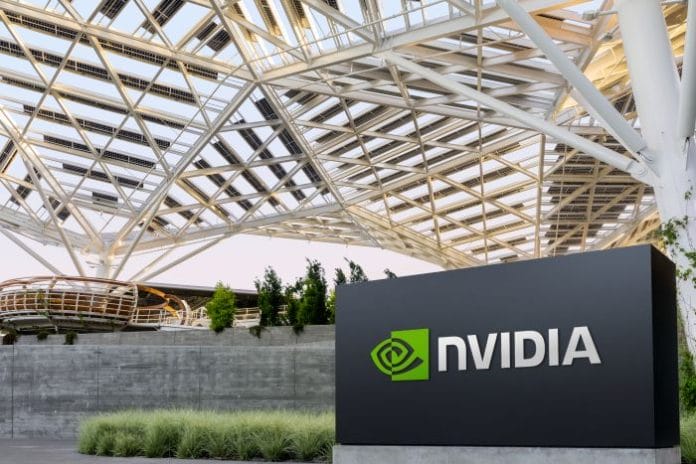
Nvidia shares could see a roughly US$280 billion swing in market value after the chipmaker reports its second-quarter earnings on Wednesday, with options traders closely watching for fresh signals on artificial intelligence demand.
Nvidia options are pricing in a 5.4% move in either direction on Thursday, below the 6.5% move implied ahead of its May earnings. The expected move is equivalent to about US$280 billion in market capitalisation, exceeding the individual market value of roughly 90% of S&P 500 constituents.
The implied move is also below Nvidia’s historical average post-earnings swing of 7.4% over the past 12 quarters, according to analytics firm Option Research & Technology Services.
“That shows some complacency for Nvidia, and it means it’s getting more predictable,” said Matt Amberson, founder of ORATS.
Nvidia’s shares fell for a seventh consecutive session on Monday, although they remain up 11.7% this year, broadly in line with the S&P 500’s 11.8% gain. The Philadelphia Semiconductor Index, meanwhile, has climbed 61%.
Investors will focus on Nvidia’s revenue guidance, chip demand and profit margins, as well as whether major cloud providers continue to expand AI-related capital spending. As the dominant supplier of AI chips, Nvidia is widely viewed as a bellwether for the broader AI trade.
The earnings come amid wider pressure on technology stocks as rising energy prices and concerns over US government debt have pushed Treasury yields higher. The 30-year Treasury yield recently reached a 19-year high and remained above 5% on Monday.
Investors are also awaiting Federal Reserve Chair Kevin Warsh’s speech in Jackson Hole later this week for clues on the outlook for interest rates.
Nvidia’s recent partnership with six major financial institutions to develop financing platforms targeting more than US$500 billion for AI infrastructure has further highlighted the scale of investment required to build data centres for AI workloads.
“Return on investment from the hyperscalers is really important,” said Will Sterling, chief investment officer at TritonPoint Wealth. “That will dictate whether or not they continue to invest with their capex.”


