


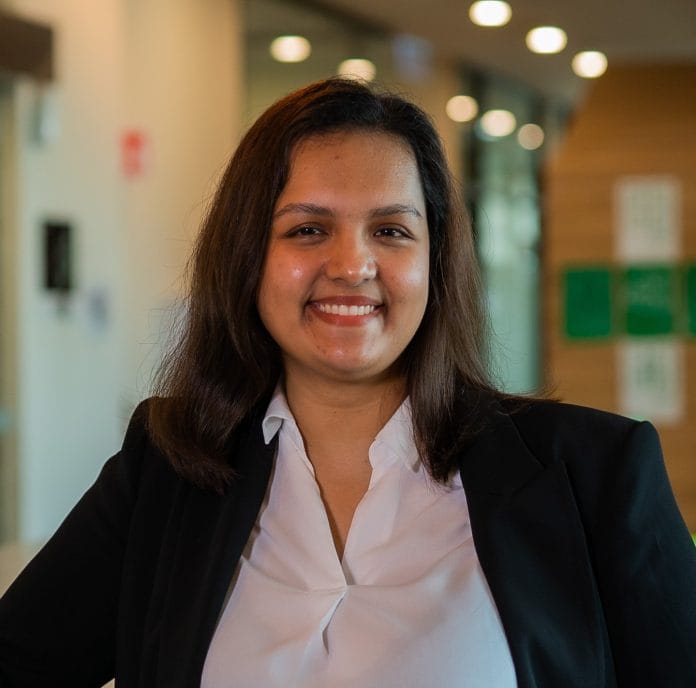
The following op-ed is contributed by Grab’s Head of Regional Platform Safety Naomi Say
As a Sarawakian and a woman leader in the technology industry, walking in Malaysia’s Hari Kebangsaan parade alongside Grab Malaysia’s predominantly women contingent was a proud and meaningful experience. It also made me reflect on what safety enables: it gives people the confidence to participate, to move freely and to be present in the moments that matter. I have spent the past 10 years at Grab working on safety. Before that, I worked in Oil & Gas, where safety was not something you thought about only after an incident. It was built into how people worked, identifying risks early, learning from what happened and, most importantly, trying to prevent the next incident.
That experience shaped how I think about safety today.
For Malaysians and for everyone across South East Asia, technology has become part of everyday life. We use it to get to work, send our children or loved ones somewhere, order food or groceries, meet friends and get home at the end of the day. So when we talk about safety in technology, the question should not simply be: “What safety features do we have?”
The better question is: “How does this make someone’s everyday experience safer?” That is a very different way of looking at it. According to our Grab ESG 2025 report, 99.9% of all rides were completed without any safety incidents. While this reflects strong progress, it doesn’t mean we cannot improve further; mobility is a fast-changing field, so progress means never standing still.
Safety should start before something goes wrong.
Maintaining a safe, reliable and equitable platform for millions of Malaysians is our highest priority. That requires clear expectations and a fair, consistent process. All platform users, including driver- and delivery-partners, agree to follow Grab’s published terms and Code of Conduct.
When ride-hailing first became part of everyday life, getting into a private car with someone you did not know required a degree of trust. Over time, technology has helped make that experience more familiar and more transparent. Today, safety can begin before a ride even starts.
Our passengers as well as our driver- and delivery-partners go through identity verification, while tools such as Share My Ride allow passengers to share their journey details with people they trust. During a trip, our Safety Centre provides access to emergency assistance and other safety tools. Trip monitoring can also identify situations that may require attention, such as significant route deviations or unsafe driving behaviour.
These may sound like simple things. But that is the point. A well-designed safety technology should not make everyday life more complicated. It should quietly work in the background, while giving people the right tools when they need them.
The next step is using technology to prevent, not just respond
One of the biggest shifts in safety has been moving from merely responding to “What happened?”, and instead proactively asking “What can we do so it doesn’t happen?”
Our Driving Safety Report, for example, uses data from a driver- and delivery-partner’s mobile phone to identify patterns such as harsh braking, acceleration, cornering and speeding. The information is then turned into feedback that can help driver-partners understand their driving behaviour and make safer choices.
We have also introduced fatigue nudges to remind driver- and delivery-partners to take a break after long periods on the road. The idea is simple: if technology can identify a potential risk early, it should help someone act before that risk becomes an incident. This is where I believe technology has the greatest potential not by replacing human judgement, but by giving people better information at the right time.
However, technology is only useful if people know how to use it. This is another lesson we have learned: having a safety feature is not enough.
Earlier this year, we found that some passengers and driver-partners were not aware of the safety tools already available to them. In Malaysia, Indonesia and the Philippines, a small number of passengers surveyed were unaware that Grab had in-app safety tools.
So we changed how we communicate with them. Instead of expecting people to search through menus or read long explanations, we began surfacing safety information at moments when it is most relevant, for example, while a passenger is waiting for a driver to arrive.
That may not sound like a technological breakthrough. But it is an important part of safety. A feature that nobody knows exists cannot help someone when they need it. Sometimes, the technology is there to help us understand what happened.
Safety is also about what happens after an incident.
AudioProtect is one example. Developed and first piloted in Malaysia, it gives passengers and driver-partners an additional option to record audio during a ride, with both parties’ consent. The recordings are encrypted and, when there is no reported incident, automatically deleted after five days. When an incident is reported, authorised teams can use the recording as part of their investigation.
We introduced it because, in some situations, two people can experience the same journey very differently. Having an objective record can help us understand what happened rather than relying only on competing accounts. But technology must come with responsibility. Safety cannot come at the expense of privacy or trust. That is why how information is collected, stored and accessed matters just as much as the technology itself.
Malaysians should be part of how safety evolves.
Perhaps the most important lesson from the past decade is that safety cannot be designed in isolation. Our users and driver- and delivery-partners tell us where the real challenges are. Their feedback has shaped how we improve existing features and where we look for new solutions.
We are also seeing this through newer technologies. KartaDashcam, for example, combines a dashcam with safety and emergency features, including technology that can process video on the device itself . It is now being used by driver-partners in Southeast Asia, including women driver-partners in Malaysia.
But the measure of any technology should ultimately be simple: does it solve a real problem for the person using it?
That is the standard my team and I carry with us all these years into our work at Grab. We cannot promise that technology will prevent every incident. What we can do is keep learning from what happens, listen to the people who use our platform, use technology responsibly and look for ways to identify risks earlier.
For the Malaysian who is getting into a car after a long day at work, for the delivery-partner starting a shift before sunrise, or for the person seeking to send a loved one home safely, that is what safety technology should ultimately mean.
Not another feature to learn.
Just one more reason to feel that someone is thinking about their safety before, during and after the journey.


