


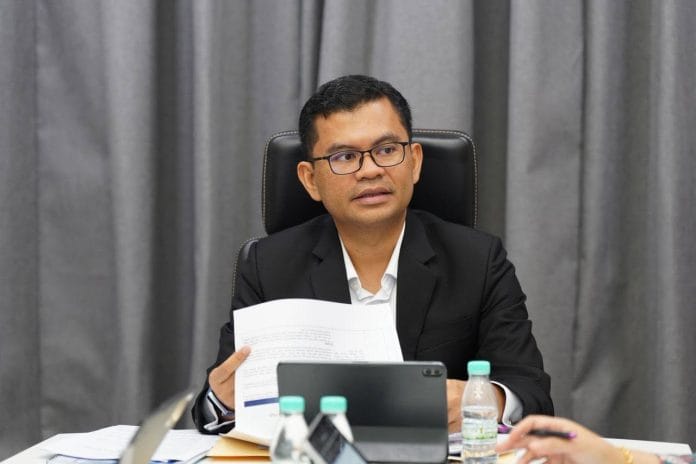
Malaysia expects to deploy about nine gigawatts (GW) of gas-fired power capacity by 2032 as the country moves to meet rising electricity demand while gradually phasing out coal-fired generation.
Economy Minister Akmal Nasrullah Mohd Nasir said the additional capacity would form part of Malaysia’s efforts to balance energy security, affordability and sustainability, with the country’s last coal-fired power plant expected to be retired in 2044.
He said electricity demand is set to continue rising, driven by population growth and higher consumption from energy-intensive sectors such as data centres.
“In terms of the projection for energy demand, definitely we see a pattern of increase. One is population growth.
“But number two, there is also an increase in energy consumption by high-usage sectors such as data centres,” he said.
Akmal Nasrullah said hotter weather could further lift electricity consumption as demand for cooling and air-conditioning increases.
He added that over the next five to 10 years, managing demand would become just as important as expanding supply.
Malaysia would therefore need to keep upgrading not only generation capacity, but also its grid and supporting infrastructure to ensure the power system remains affordable, secure and sustainable.
Akmal Nasrullah said energy planning should also place greater emphasis on efficiency and conservation, rather than focusing solely on how much new capacity must be added.
He said this would require coordination by the Energy Transition and Water Transformation Ministry and the Energy Commission as Malaysia works to reduce the energy sector’s carbon footprint while keeping pace with demand.
Meanwhile, Akmal Nasrullah, in his keynote address during the Energy Regulatory Insights 2026, outlined three priorities for the next phase of energy reform: A more competitive and progressive energy market, accelerated grid modernisation and stronger energy efficiency measures.
He said grid upgrades under the 13th Malaysia Plan would be critical to enabling investments to connect faster, improving system efficiency and supporting reliable economic growth.
On efficiency, he said the first National Energy Efficiency Action Plan (NEEAP) exceeded its original target, delivering cumulative electricity savings of 60,886 GW-hours, equivalent to RM16.1 billion, between 2016 and 2025.
Under NEEAP 2.0, Malaysia is targeting an 11.6% reduction in energy demand against the business-as-usual scenario by 2035, a move expected to lower costs, ease pressure on the system and strengthen economic competitiveness.


