The local automotive industry is expected to remain resilient in 2026 despite a modest slowdown in vehicle sales, supported by fuel subsidies, rising electric vehicle (EV) adoption and continued government protection of the domestic automotive ecosystem, according to Kenanga Research.
The research house forecasts total industry volume (TIV) of 790,000 vehicles in calendar year 2026, representing a 4% decline from the previous year and broadly in line with the Malaysian Automotive Association’s (MAA) outlook.
Kenanga said domestic vehicle demand is likely to remain largely insulated from geopolitical tensions in the Middle East and fluctuations in global oil prices because the majority of Malaysians continue to benefit from subsidised RON95 fuel.
Although the unsubsidised RON95 price currently stands at RM3.87 per litre, eligible motorists under the BUDI95 programme continue to pay RM1.99 per litre. The monthly subsidised fuel quota has been reduced to 200 litres from 300 litres previously, but the government estimates that about 90% of Malaysians consume less than 200 litres monthly, limiting the impact on consumer spending.
Electrification to Drive Replacement Demand
Kenanga expects replacement demand to increasingly shift towards electrified vehicles, with EVs now accounting for approximately 6% of total industry volume, compared with less than 1% five years ago.
The research house projects EV penetration could reach 10% of TIV by 2027 as more manufacturers commence local production and expand hybrid and plug-in hybrid offerings.
Motorcycles are also expected to benefit if fuel subsidy rationalisation continues, with Honda assembler Hong Leong Industries Bhd (HLIND) identified as one of the biggest beneficiaries due to its dominant position in the local motorcycle market.
Meanwhile, the government’s decision to reduce the subsidised diesel price for eligible Malaysians nationwide to RM2.10 per litre from July 1, 2026 is expected to provide some relief to the commercial vehicle segment, particularly lifestyle pick-up trucks, which experienced weaker demand following targeted diesel subsidy reforms introduced in 2024.
Government Policy Fosters Local EV Manufacturing
Kenanga said recent government policies are aimed at transforming Malaysia from an import-dependent EV market into a regional manufacturing hub.
Effective July 1, 2026, imported completely built-up (CBU) EVs are subject to a minimum pre-tax cost, insurance and freight (CIF) value of RM200,000, while locally assembled completely knocked down (CKD) EV manufacturers must meet a minimum selling price of RM100,000 and export at least 80% of production.
The research house believes these measures will encourage global automakers to establish local supply chains and manufacturing operations.
Among the expected beneficiaries are Perodua, which is developing its own smart mobility plant, Proton through its Tanjung Malim facility, Tan Chong Motor Holdings Bhd via its Segambut operations, EP Manufacturing Bhd’s Melaka assembly plant, as well as Sime Darby’s Inokom Corporation, which is expected to play a larger role as a contract assembler.
Chinese Brands Gain Market Share
Kenanga expects Chinese automotive brands to continue expanding their presence through local assembly programmes following the expiry of tax incentives for imported EVs.
Locally assembled models from brands including Chery, Jaecoo, BYD, Xpeng, Great Wall Motor, BAIC, SAIC and Zeekr are expected to drive further market share gains as manufacturers localise production.
Despite growing competition, national carmakers are forecast to maintain their dominance, accounting for about 67% of total industry volume in 2026, supported by strong demand for affordable vehicles.
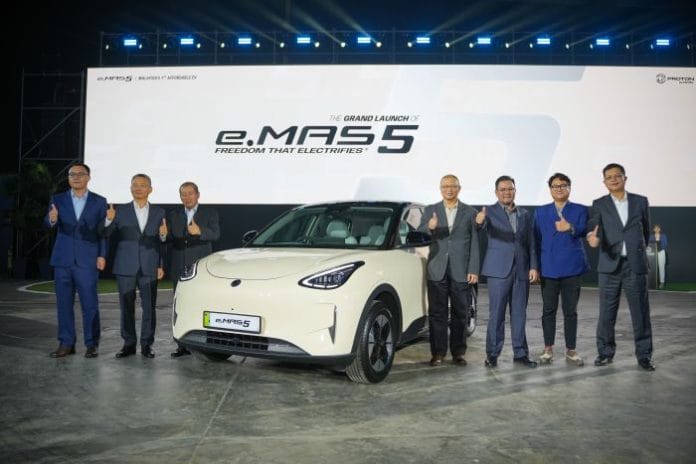
Upcoming launches such as the new-generation Perodua Myvi, Proton e.MAS 7, Proton e.MAS 5, Xpeng MO3 sedan and BYD Shark plug-in hybrid pick-up are expected to support consumer interest.
Earnings Visibility Remains Strong
Kenanga said the industry’s earnings outlook remains favourable, underpinned by an estimated 162,000-unit booking backlog as at end-May 2026, significantly above the historical average of around 140,000 units.
More than half of the outstanding bookings comprise newly launched models, reflecting sustained consumer appetite for fresh products.
The research house expects EV sales to continue growing in 2026, albeit at a slower pace than the triple-digit expansion recorded previously, as manufacturers gradually shift from imported vehicles to locally assembled production.
Proton is expected to maintain its leadership in Malaysia’s EV market, with the locally assembled e.MAS 7 and e.MAS 5 projected to account for 40% to 50% of total EV sales.
Kenanga added that while discounting and promotional campaigns are likely to remain intense as manufacturers compete for market share, companies with diversified earnings streams and stronger product positioning are expected to outperform as Malaysia’s automotive industry transitions towards greater electrification and localisation.